

How a Korean auto parts maker unified scattered systems with an AI chatbot
Why Company W, an auto parts maker with about KRW 200 billion in revenue, chose DFINITE's AI agent DARVIS to integrate data across scattered systems.
Company W is an automotive parts maker with around KRW 200 billion in revenue that supplies key parts to major Korean carmakers. The biggest challenge it faced was "data disconnection." Information scattered across many systems had become a barrier to making decisions quickly.
Plenty of systems, too little information
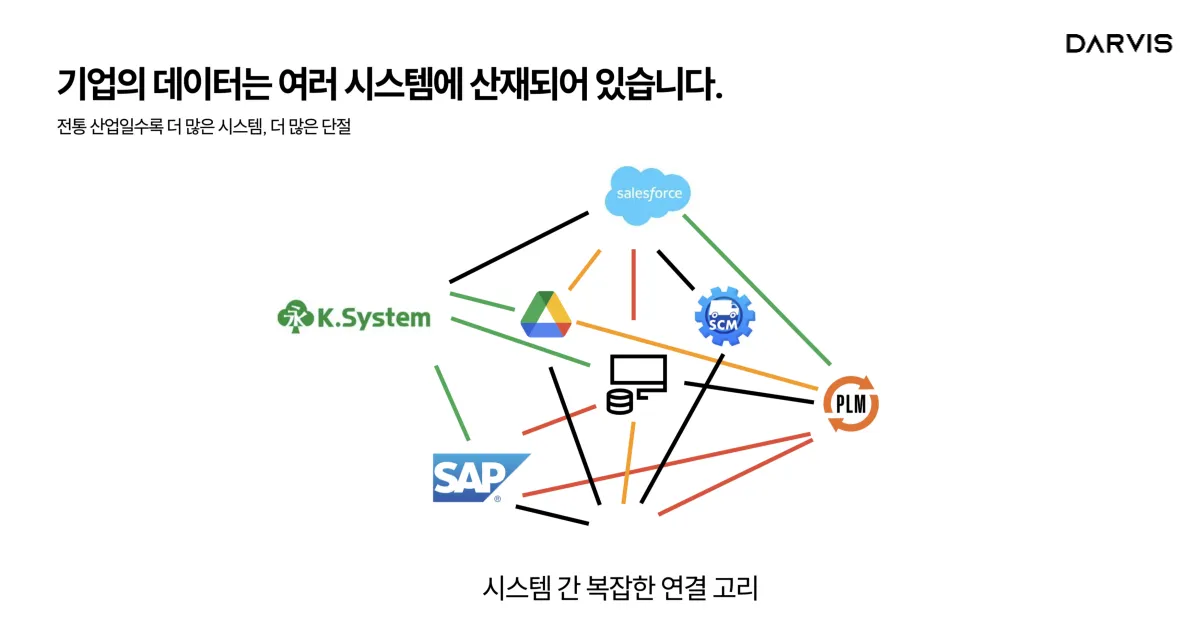
Company W had many systems, including ERP, MES and SCM.
Paradoxically, though, the information people needed was hard to find. Cross-checking between systems was difficult, so data often went missing, and most of these problems only surfaced late, at the settlement or closing stage.
Finding one piece of information meant checking several systems in turn, and even working out which system held the information was not easy. Each time more information was needed, a new program had to be developed, and the situation kept repeating.
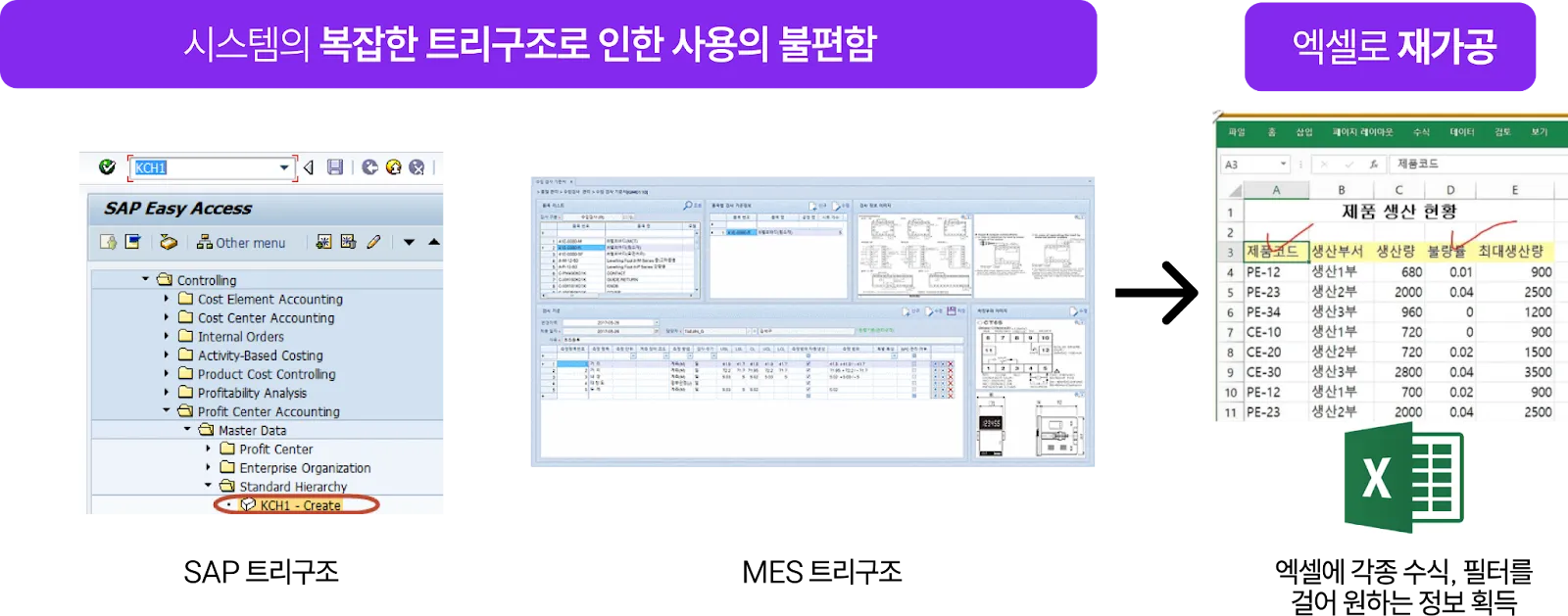
For the people doing the work, it was even harder. They would export production-plan data from ERP to Excel, open MES to download actual-output data, then join and process the data in yet another Excel file, over and over without end. One person on the shop floor told us, "I think I opened and closed Excel at least five times in a single morning. And if I saved one file wrong by mistake, I had to start over from the beginning."
Making even a simple report required extracting data from three or four systems, linking it again in Excel and processing it with pivot tables. When an urgent report request came in, overtime was unavoidable, and the report made that way had to be rebuilt from scratch the next day. There were many systems, but getting the information actually needed took a great deal of time and effort.
Complex systems were hard to train people on
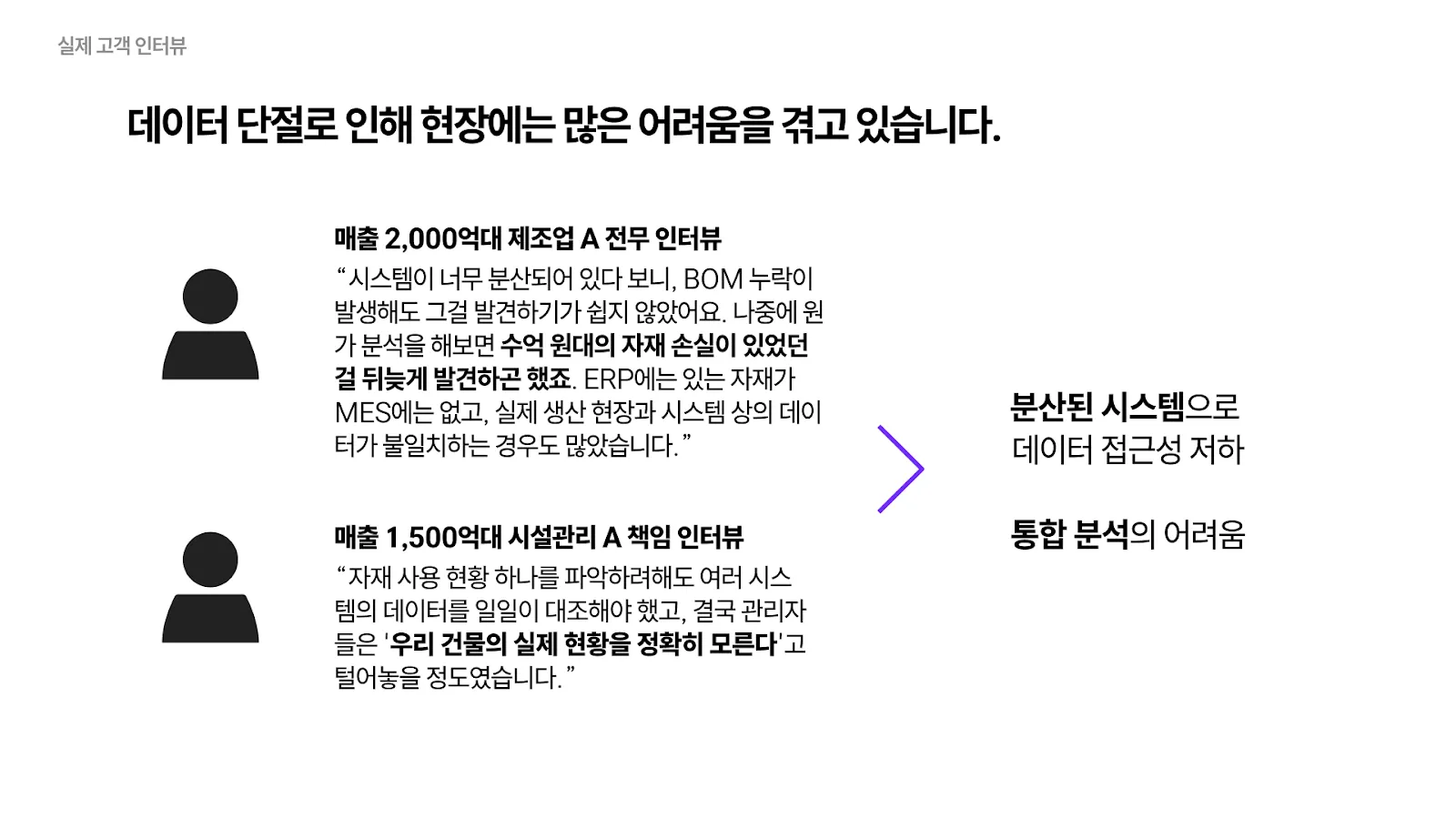
Because the systems were so complex, training a new employee alone took more than six months.
People inevitably forgot how to use programs they rarely touched, and the gap between the manuals and actual operations was wide. In the end, the manuals went largely unused.
"Before, we could only check the accuracy of BOM data after the fact, and much of it had to rely on the experience and intuition of the person in charge. Now that immediate verification is possible based on integrated, accurate data, our material planning is more reliable. As a result, we expect losses from missing materials to drop significantly." These words from a Company W manager capture the change before and after the AI chatbot was introduced better than anything else.
Chosen for its LLM-based technology
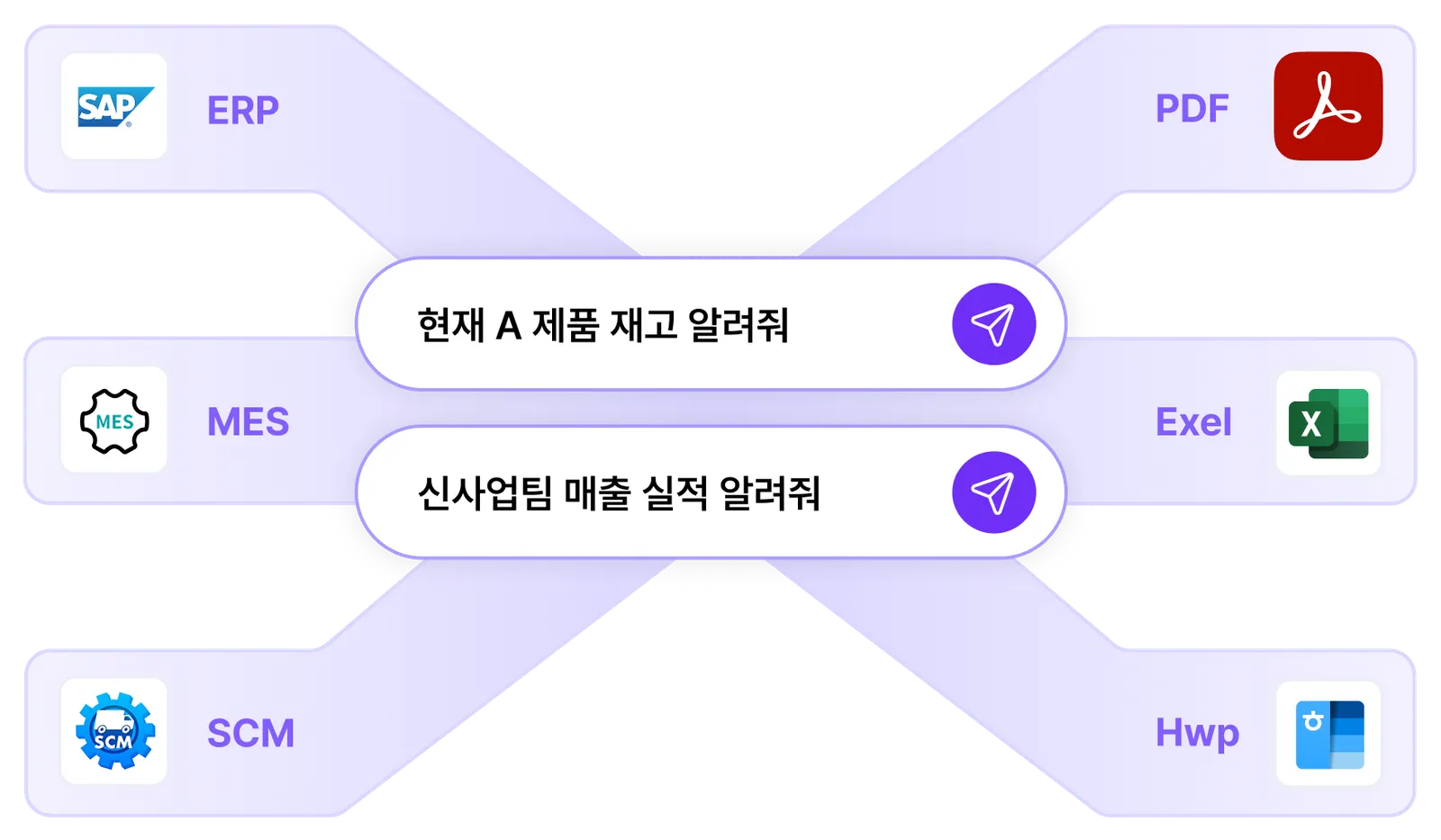
While the customer was reviewing several solutions, what caught its attention was DFINITE's distinctive technology. DARVIS is an AI agent that integrates a company's system data and document data, and two of its core functions in particular matched Company W's needs precisely.
The first is DB integration based on txt2sql technology. It connects data from systems such as ERP, MES and SCM in real time, so people can ask a question in natural language and get an answer right away. Two years of technical development raised its accuracy above what an LLM alone could achieve, while keeping responses fast.
The second is document integration based on RAG technology. DARVIS learned the manuals and regulations that had seen little use, so people can now look things up the moment they need them. This technology, together with a deep understanding of the manufacturing floor, is what led the customer to choose DFINITE.
Satisfaction shown in the data
Company W's employees began using DARVIS actively. The system data integration function in particular brought a big change to daily work. Data collection that used to be done by hand, moving between several systems, is now handled with a few simple questions.
Usage reflects this satisfaction. Monthly DARVIS usage from August 2024 to January 2025 rose steadily, with a particularly steep increase in November. The document integration function has also made searching manuals and regulations much faster, and it is being used actively in new-employee training as well.
Deployed on-premises, DARVIS fit fully into Company W's work environment. A virtuous cycle took hold: the more it is used, the more the AI's accuracy improves and the more it learns about the work context.
Preparing for a bigger leap
Company W is preparing for bigger innovation with DARVIS. Beyond today's use, which centers on looking up information, it plans to extend the scope to areas such as production planning optimization and quality prediction.
DFINITE's growth will continue.
Starting with securing customers centered on manufacturing in 2024, DFINITE is preparing to expand into the pharmaceutical, construction and logistics industries in 2025. By 2027, the goal is to build a broad customer base by introducing RPA and moving to AI agents.
DARVIS's functions, currently focused on looking up information, will also expand further. They will develop into automatic insight generation and strategic decision support, speeding up companies' digital transformation even more. Please keep following DFINITE's growth.
You can find more of DFINITE's AI chatbot success stories below.
We join scattered data with an ontology, flag what drifts first, and keep the evidence behind every decision.