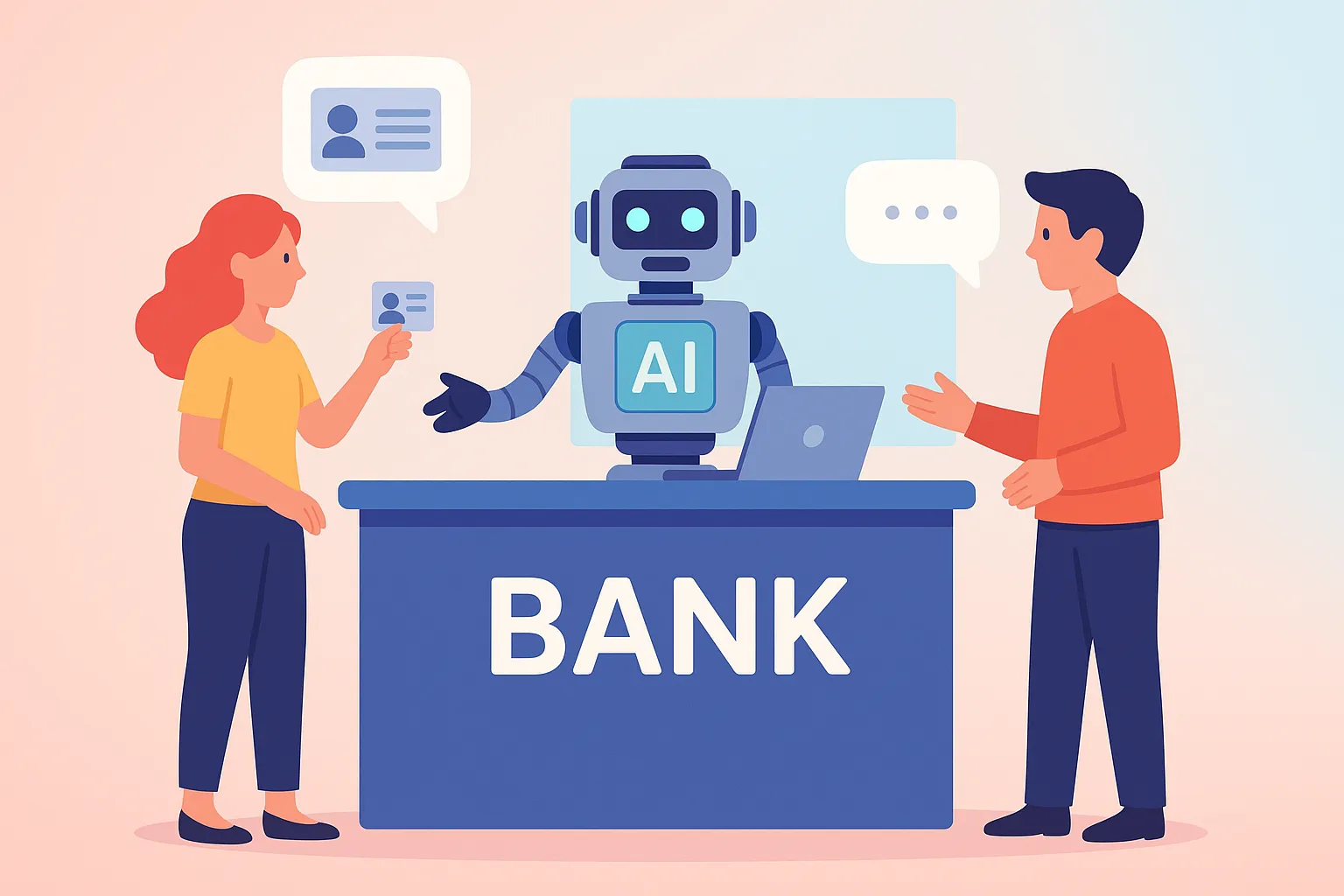

Internal AI adoption at global companies (2023-2025): Walmart to Klarna
Global internal AI cases, 2023-2025: Walmart's super agents, Klarna automating 700 people's work, Morgan Stanley's knowledge assets, and agentic AI.
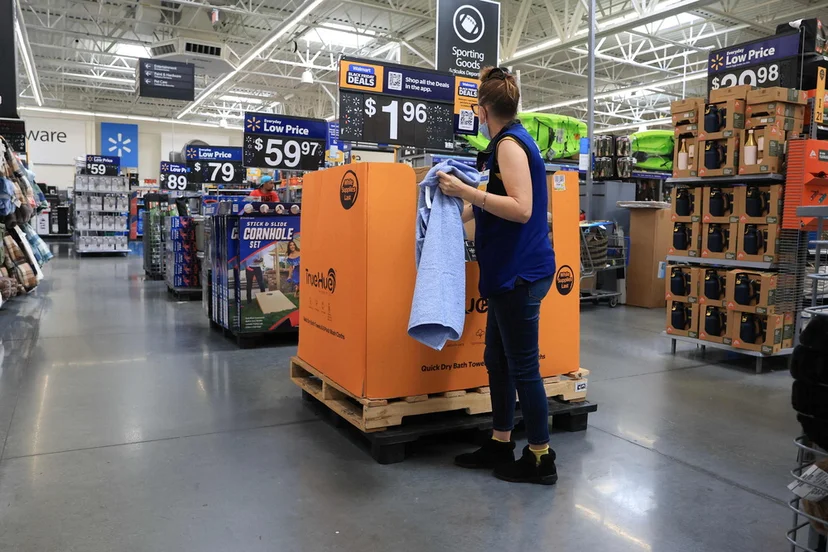
"We use ChatGPT all the time, so why doesn't the AI know our company's data?"
Many people at companies run into this. Generative AI has plenty of general knowledge, but it knows nothing about your company's ERP data or internal rules. So how are global companies solving this problem?
From 2023 to 2025, leading companies around the world have gone beyond simply adopting AI and staked their future on AX (AI transformation). Walmart built super agents for its 1.5 million employees, Klarna cut its workforce by 40% with AI while productivity soared, and Morgan Stanley used AI to turn decades of investment knowledge into an asset.
What do they have in common? They focused on "agentic AI" and "security."
Walmart: super agents for every employee
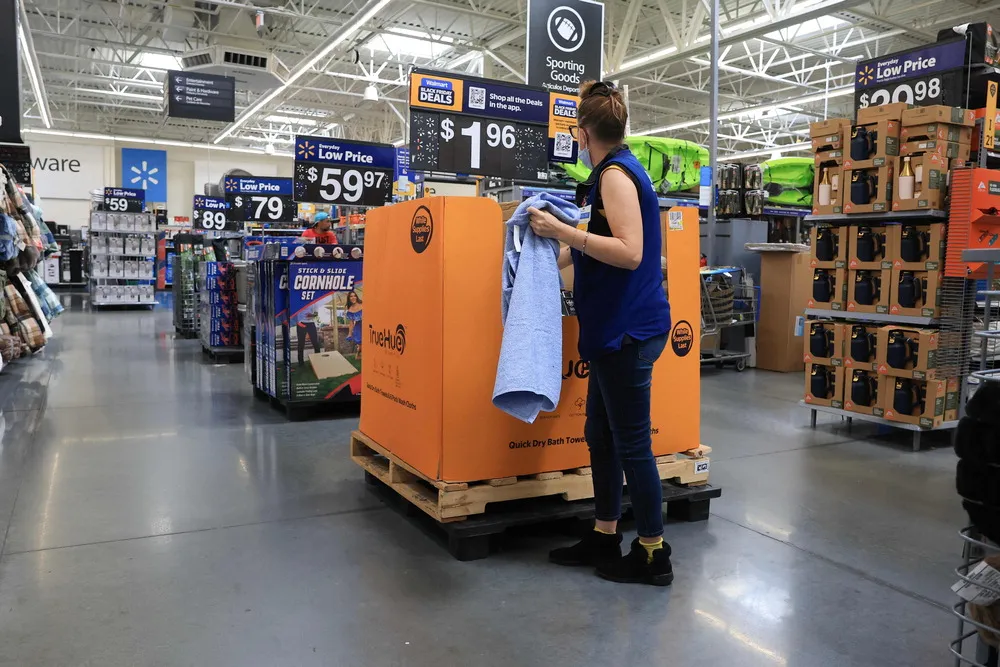
Walmart expanded its internal AI to 11 countries by 2024 and declared its shift to becoming an AI company. It didn't just add a single chatbot; it gave each of its 1.5 million employees an AI assistant suited to their own work.
The super agent strategy
Walmart's super agents are specialized by user group: "Sparky" for customers, "Marty" for suppliers, "Wibey" for engineers, and a super agent for employees. Dozens of AI agents that had been split up by function were consolidated around the user.
They run on "Element," a machine learning platform Walmart built itself, and "Wallaby," its in-house large language model. Instead of relying on outside AI services, Walmart built its own infrastructure.
Usage at overwhelming scale
The work-assistant AI used by 1.5 million store associates is accessed by more than 900,000 people a week and handles more than 3 million queries a day. Given that most companies struggle to roll out even one AI agent, the speed and scope of Walmart's company-wide AI infrastructure are striking.
CEO Doug McMillon said that "AI will deliver hyper-personalized experiences that take customers' preferences and context into account," emphasizing the goal of Adaptive Retail. Walmart's internal AI adoption shows a direction in which AI amplifies what people can do.
Klarna: operational efficiency taken to the extreme with AI
Swedish fintech company Klarna took the opposite approach. It used AI to pursue operational efficiency to the extreme.
A radical restructuring
CEO Sebastian Siemiatkowski said that AI adoption and natural attrition reduced the company's headcount from about 5,000 to 3,000, a 40% drop. In particular, after Klarna introduced an AI customer service system in partnership with OpenAI in 2023, AI replaced 700 customer service staff.
Keeping knowledge from walking out the door
The workforce cuts were possible because knowledge is stored in AI systems, not in people's heads. More than 87% of employees use AI through "Kiki," the internal knowledge base, which handles more than 2000 questions a day.
Klarna can run the company with 3,000 people because, when someone leaves, the work logic and knowledge they handled stay in the system. It is considered one of the most dramatic efficiency cases among internal AI deployments abroad.
Morgan Stanley: turning dormant knowledge into an asset
In 2023, Morgan Stanley became the first financial firm to partner with OpenAI to build an AI system based on its internal knowledge. Decades of accumulated investment research and reports that had simply sat on servers have become a living knowledge asset.

AI @ Morgan Stanley
The system connects more than 100,000 internal investment research reports and documents, so wealth managers can find the information they need in seconds. It learns from and queries only internal data, in a secure environment with no external leakage.
The power of agentic AI
Wealth managers no longer dig through thousands of pages of reports themselves. They work out the best investment strategy in conversation with AI. This change has carried through to real corporate value. Morgan Stanley recently raised its investment rating on a Korean company, calling it "an ideal platform for using agentic AI."
Starting with Morgan Stanley, OpenAI is now going after the custom enterprise AI consulting market in earnest, including a $200 million contract with the U.S. Department of Defense. The cost, however, is a burden: building such a system runs from at least KRW 13.7 billion to hundreds of billions of won.
Three key trends from internal AI adoption at global companies
Looking at these three companies, common trends emerge.
Keyword | Details | Notes |
|---|---|---|
Data connection | Logical integration, not physical consolidation | Existing systems stay in place, fast rollout |
Agentic AI | Intelligent assistants that decide and act on their own | Beyond simple chatbots, work automation |
Security | Data protection based on on-premises and closed networks | Blocks external leaks, audit logs |
Why data connection matters
Walmart, Klarna and Morgan Stanley all avoided tearing out their existing systems. Instead, they made it possible for AI to read data from multiple systems by connecting it logically. This is the key strategy for sharply cutting build time and cost.
The era of agentic AI
Chatbots that just answer questions are not enough; companies need agents that make their own judgments and carry out work. Like Walmart's super agents, AI specialized for each role becomes a partner to the people doing the work.
Security is non-negotiable
Every one of these companies emphasizes a security architecture based on on-premises deployment or closed networks. However smart the AI is, it can't be adopted if data leaks outside.
Can our company adopt world-class AI too?
The internal AI cases from abroad are enviable, but there are real barriers: build costs in the hundreds of billions of won, 20,000 technical staff, and security concerns. For a mid-sized company, that scale is out of reach.
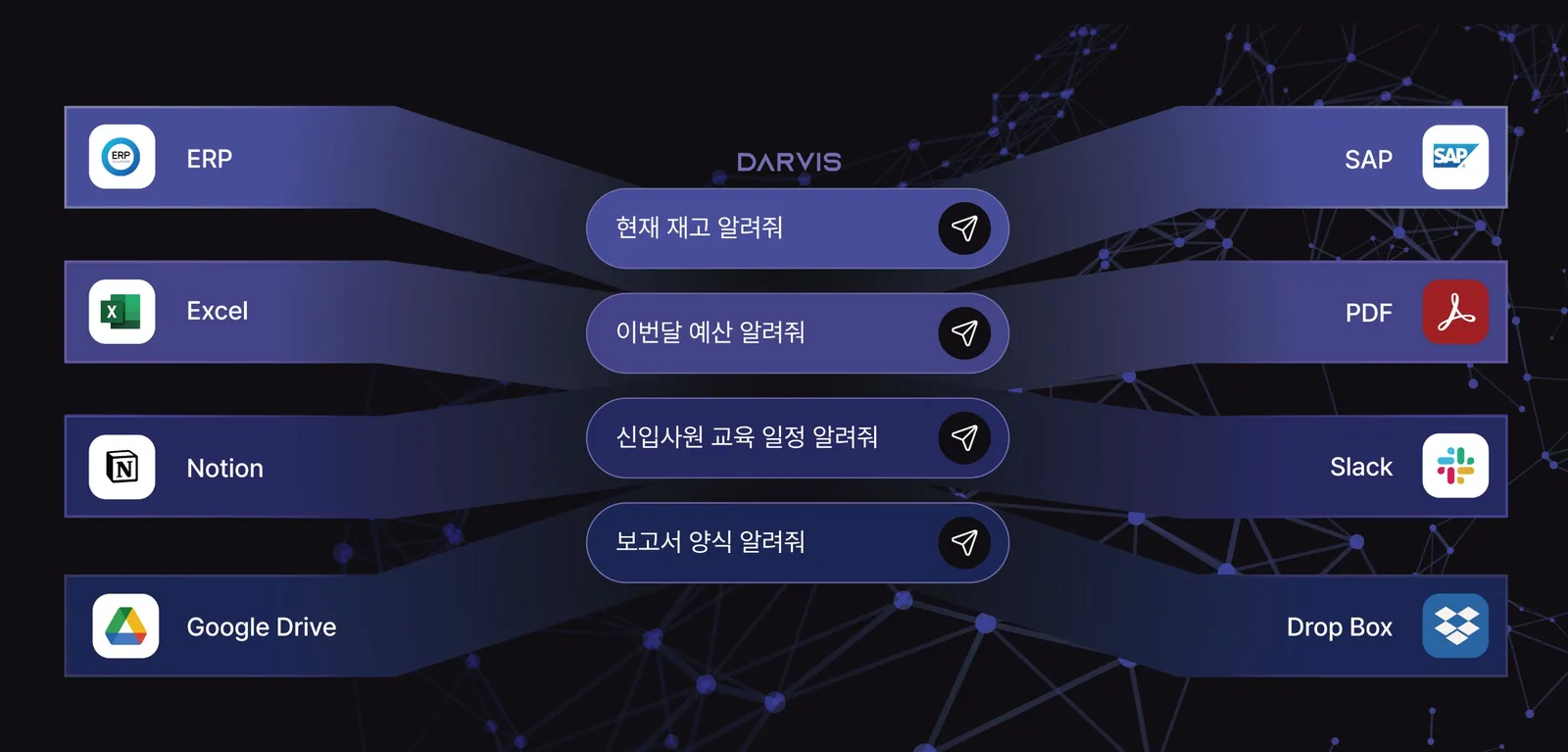
But scale is not the point. Look again at what Walmart, Klarna and Morgan Stanley have in common. They connected their data instead of consolidating it, blocked external leaks, and made it possible to ask a question in natural language and get an answer right away.
With a system that meets these three conditions, your company can use world-class AI too. What matters is not the size of the technology but how accurately the AI understands your company's data.
In fact, Korean companies are also adopting AI systems that connect internal data in on-premises environments, and are seeing results such as shorter search times and work automation. Keeping up with global trends is no longer optional; it is a matter of survival.
If you'd like practical insights on using AI and the latest trends, keep reading the DFINITE DARVIS blog. We share AI know-how and real cases that show how to raise productivity at work.
For more AI insights, see the related posts below. Thank you.
We join scattered data with an ontology, flag what drifts first, and keep the evidence behind every decision.