
2025 AI use cases in finance: how are major banks using AI?
AI in banking, from Shinhan, Hana, NH NongHyup and KakaoBank to HSBC and ING: chatbots, unmanned branches, risk management and wealth management.
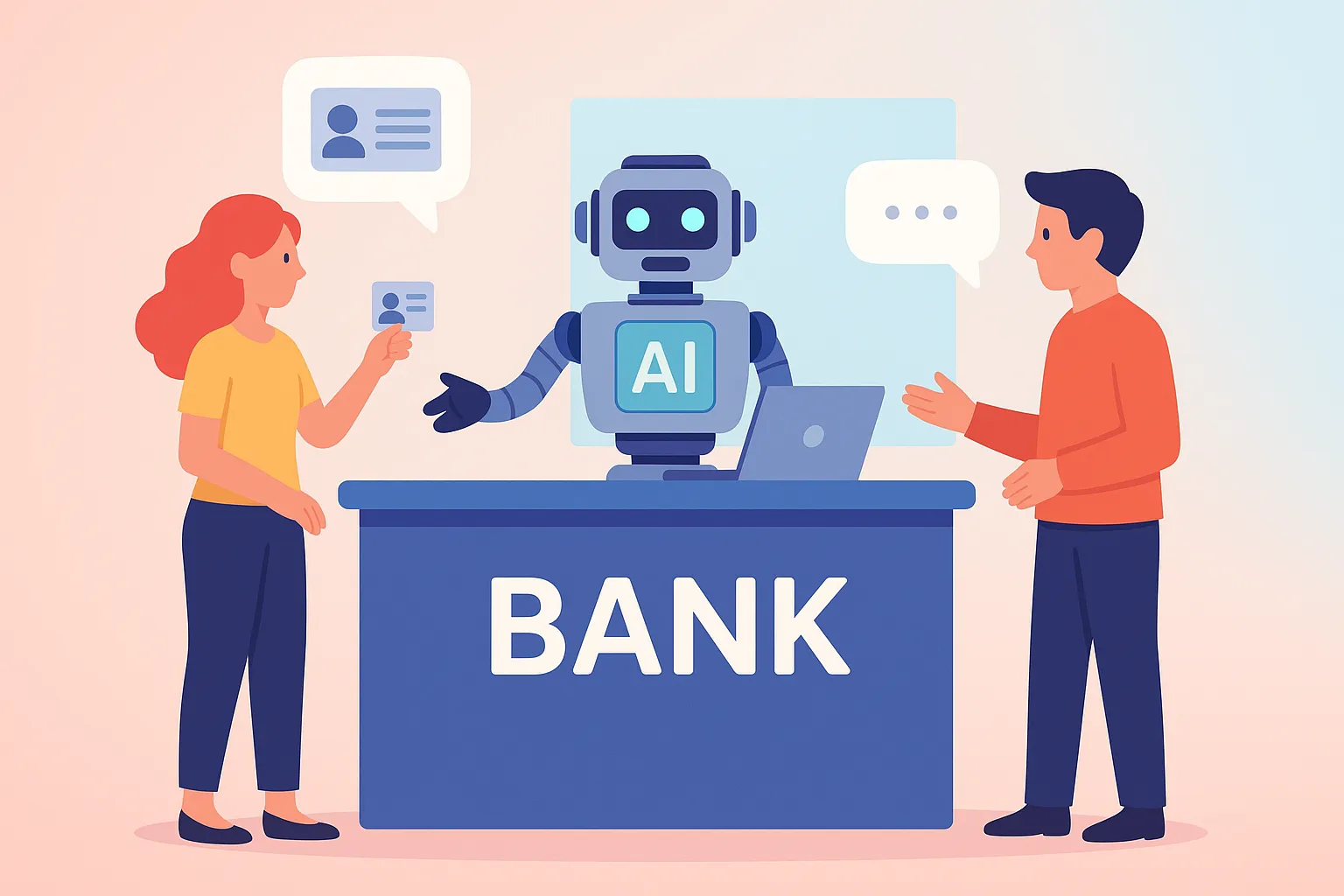
"These days, it feels like there's more AI than people at the bank."
That's what one customer said after a recent bank visit. At the counter, AI bankers help handle transactions, and in mobile apps, AI chatbots answer questions 24 hours a day. Has banking really become work that AI does?
AI use is spreading fast in financial services. AI can deliver three goals at once (maximum efficiency, sophisticated risk management and new kinds of customer experience), and it has become an essential strategy for financial institutions. Banks in Korea and around the world are racing to speed up AI adoption.
In this post, we look in detail at real AI use cases in finance at major Korean banks, area by area, and at how AI is changing the financial industry.
Why the financial sector is rushing into AI
As the financial industry's AI transformation moves quickly, AI adoption has become a hot topic.
After COVID-19, demand for non-face-to-face financial services surged, and banks needed systems that could serve customers without a physical counter. At the same time, as financial fraud and security threats grow more advanced, banks need more sophisticated risk management.
Policy support also played a part. The Financial Security Institute and the Financial Services Commission revised the AI adoption guidelines and eased network separation rules. With finance-specific training data and dedicated platforms now available, security and compliance concerns eased, which further accelerated AI adoption at financial institutions.
AI use cases in finance: six key areas
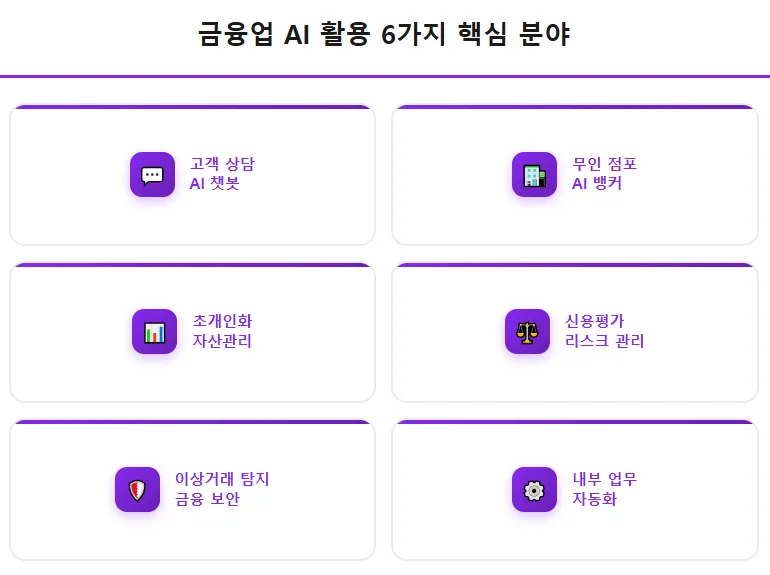
Customer service and AI chatbots
Shinhan Bank and KakaoBank are transforming customer service with chatbots based on generative AI. Going beyond simple balance checks and transfer questions, they add emotion recognition to read the customer's state and respond appropriately.
At KakaoBank, AI automatically handles more than 90% of the millions of customer inquiries it receives each year. Instant responses around the clock have greatly improved customer satisfaction, and human agents can now focus on solving more complex customer problems.
Unmanned branches and AI bankers
NH NongHyup and Shinhan Bank are expanding unmanned branches called "AI branches" across the country. AI bankers handle deposits and withdrawals, loan consultations and even the issuance of various certificates.
At Shinhan Bank's AI branches, AI counters directly handle 60-80% of major banking tasks, with a very high completion rate. NH NongHyup has deployed AI bankers at more than 1,100 branches, automating product explanations and investment guidance. Branch operating costs are going down while customer access is actually improving.
Hyper-personalized wealth management
Hana Bank and KakaoBank offer AI-based personalized financial product recommendations. They analyze a customer's gender, age, income, transaction history and investment profile together to suggest the financial products and investment portfolio that best fit that person.
Hana Bank's AI-based personalized policy fund search service in particular automatically finds the various government policy funds that small business owners and SMEs can use, helping customers with limited financial knowledge get those benefits too. This also contributes significantly to wider financial inclusion.
Credit scoring and risk management
Machine-learning credit scoring models are among the most innovative AI use cases in finance. By analyzing not only traditional financial information but also non-financial data such as online transaction patterns and spending behavior, they make more accurate credit assessments possible.
This has opened the door to loans for "thin-file customers" with limited credit history, such as young people, freelancers and small business owners. With AI-based loan review automation, Hana Bank has cut review time significantly while actually improving accuracy.
Fraud detection and financial security
As financial fraud grows more sophisticated, AI-based fraud detection systems (FDS) matter more and more. KakaoBank and NH NongHyup learn and analyze transaction patterns in real time to detect abnormal transactions immediately.
They can block financial crimes such as voice phishing and money laundering before they happen and minimize harm to customers. These systems identify risky transactions far more precisely than older rule-based systems and respond quickly to new fraud methods.
Internal work automation
Shinhan Bank's "AI ONE" and Hana Bank's knowledge chatbot are dramatically raising staff productivity. Employees can query data scattered across SAP, ERP and groupware in one place, and instantly search complex financial regulations and procedures.
Ask "Show me the trend in VIP customer deposits last month," and the AI automatically collects the data and delivers it as a report. With repetitive tasks automated, from writing meeting minutes and classifying documents to forecasting overseas remittances, employees can focus more on customer relationship management and strategic work.
AI adoption at major Korean banks

Shinhan Bank: a comprehensive strategy from an AI leader
Shinhan Bank is one of the most active adopters of AI in Korea. Its generative AI financial knowledge Q&A service, which links OpenAI GPT models to the bank's internal work network, learned from more than 100,000 items covering bank products, regulations and procedures, greatly improving staff expertise in customer consultations.
Beyond its AI branches, it runs a range of AI services, including sentiment analysis and detection of abnormal foreign-currency remittances, in an integrated way on its "AI Studio" platform. "AI ONE," its AI work assistant for employees, has optimized internal processes and improved both speed and accuracy.
Hana Bank: AI innovation focused on corporate banking
Hana Bank brought its own generative AI chatbot platform in-house, reducing reliance on outside vendors and strengthening security. It stands out especially in corporate banking.
Its AI-based personalized policy fund search service and automated review for purchasing export bills have made things much easier for corporate customers. Its AI financial incident monitoring system detects risks that can arise in areas such as lending in real time and prevents incidents.
NH NongHyup Bank: a model for rolling out AI across a national network
NH NongHyup Bank is known for deploying AI bankers at more than 1,100 branches nationwide. Its generative AI-based corporate credit review system automates loan reviews and simplifies report writing.
An AI treasury management assistant for businesses, developed with Webcash, provides automated funds reports, fraud detection and conversational Q&A, easing the cash management burden for corporate customers.
KakaoBank: AI innovation at a digital-native bank
KakaoBank, an internet-only bank, has been built around digital and AI from the start. AI chatbots automatically handle more than 90% of customer inquiries, and its real-time FDS effectively blocks financial fraud.
Its hyper-personalized product recommendations and credit ratings based on large-scale customer data are regarded as model examples of innovative fintech services.
How are global financial institutions using AI?

Financial institutions abroad are also active users of AI. The UK's HSBC has rolled out more than 600 AI projects across the company, using them for customer service automation, risk management and regulatory compliance support.
ING in the Netherlands has significantly raised the level of its real-time customer service with AI-based consultations and personalized investment advice. In the United States, JPMorgan and Goldman Sachs are strengthening their competitiveness by using generative AI for risk management and investment strategy.
That said, global banks generally operate under more flexible regulation than Korean banks and apply AI more widely. Korea has strict security and privacy rules, but recent policy easing is narrowing the gap.
The future of finance that AI is shaping
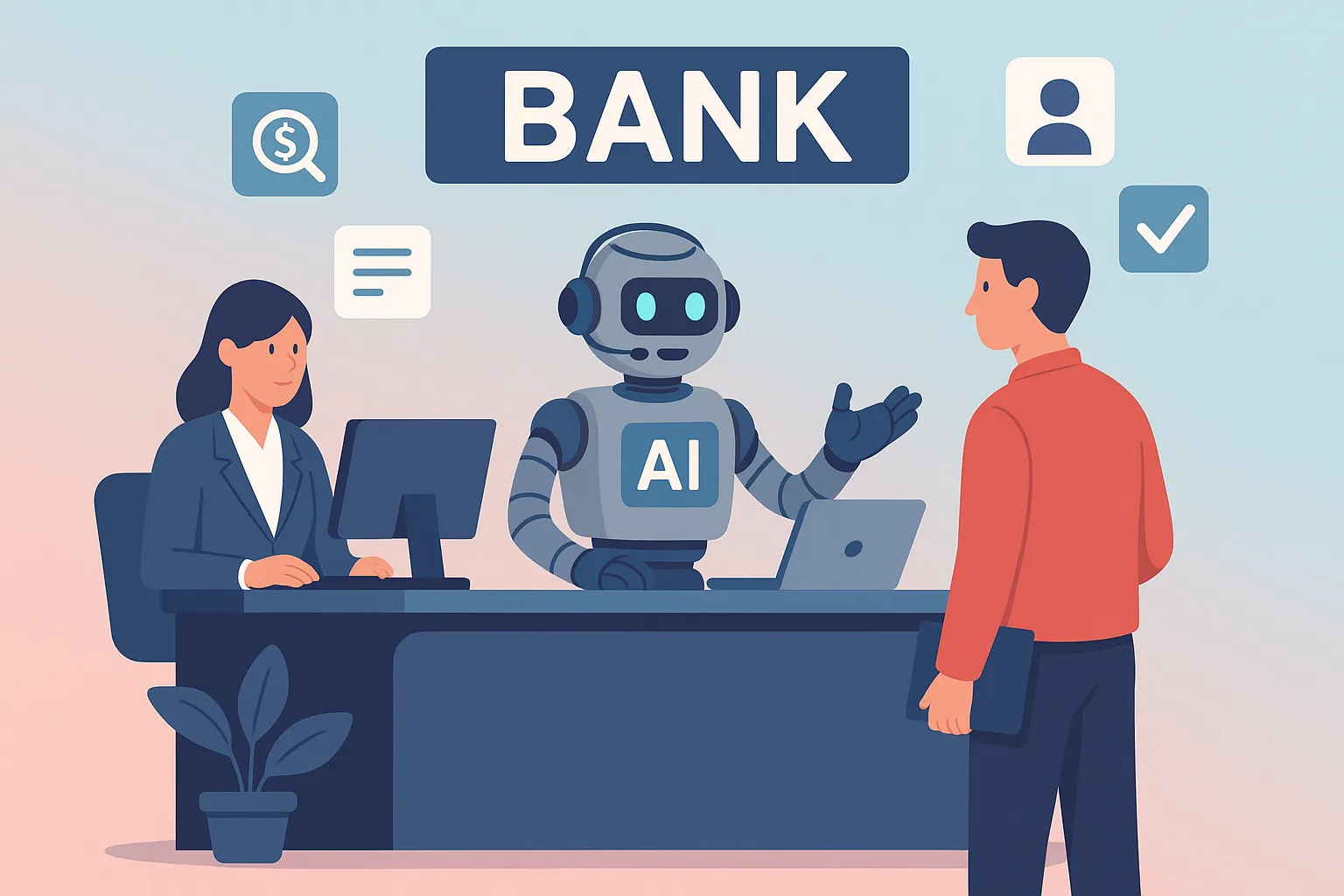
These AI use cases in finance show clear results in three areas. Productivity improved through automated handling of millions of inquiries a year and lower branch operating costs; accuracy through more precise loan reviews and fraud detection; and customer experience through personalized service around the clock.
This will only expand. Hyper-personalized finance will become more precise, and generative AI will move beyond simple answers to handle complex financial consultations. In the end, a financial institution's competitiveness depends on its ability to use AI.
The agent you meet at the bank, the chatbot in the app and the personalized product recommendations are now quite likely to be AI already. The AI revolution in finance has already begun.
If you'd like more AI news and insights, see the related posts below. We will work hard to bring you high-quality content. Thank you.
We join scattered data with an ontology, flag what drifts first, and keep the evidence behind every decision.