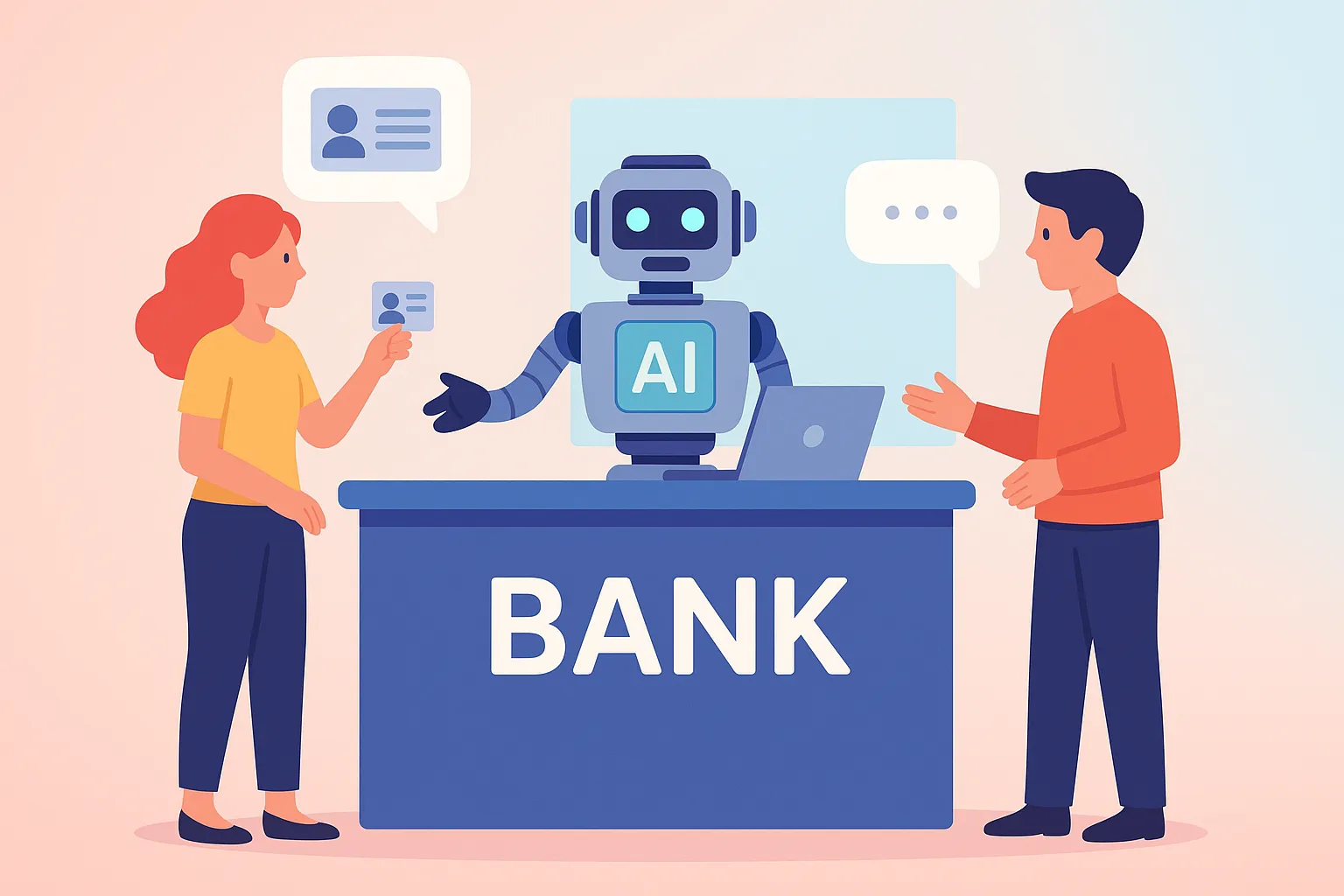

The AX (AI transformation) era? AI use cases at Korean companies
AI use cases at Korean companies from Samsung to Hyundai in the 2026 AX era, and how DFINITE's enterprise AI DARVIS balances security and efficiency.

Still talking about DX? Now it's AX
One of the key keywords that Trend Korea put forward for 2026 is "HORSE POWER." Within it, "Efficient Org," in other words AX (AI Transformation), has emerged as a decisive factor in whether organizations survive.

DX (Digital Transformation) is now old news. Converting paper documents to digital and moving systems to the cloud is no longer enough to stay competitive. AX means AI flowing through the organization like its bloodstream, blending naturally into every process from decision-making to execution.
Many leaders ask the same question: "We adopted AI too, so why hasn't productivity changed?" Many organizations bought the technology but don't actually use it, or have plenty of systems but data so scattered that no one can get to it.
The AX era is not simply about adopting AI. It means using AI to give the organization maximum efficiency and reshape it into a lean structure with the excess cut away. And this change is a matter of survival, not a choice.
AI use cases at Korean companies
Large Korean companies have already completed the shift to AX or are moving quickly. This is not pilot testing. They are establishing AI as company-wide work infrastructure.
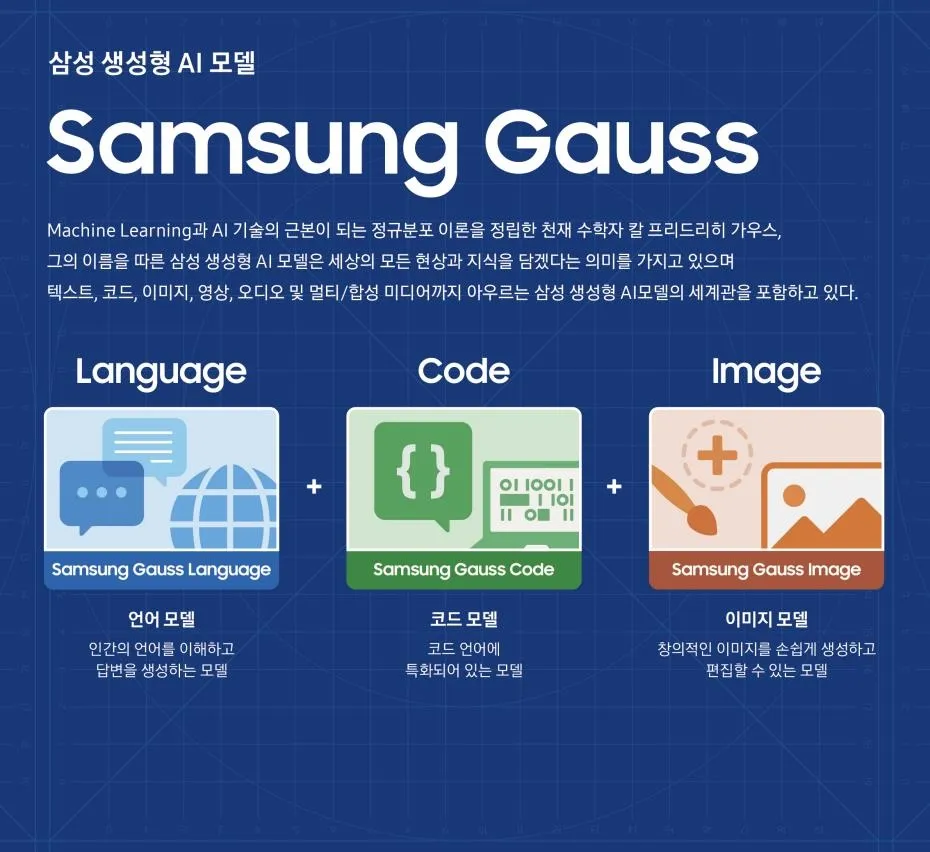
Samsung Electronics: security and productivity with its own model
Instead of placing a blanket restriction on external AI over security concerns, Samsung Electronics developed its own AI model, "Samsung Gauss2." All employees use the AI assistant for tasks such as writing emails, summarizing papers and coding support, maximizing productivity.
The key is that it runs only on internal servers, with no data sent outside. The setup brings the risk of leaking confidential information to zero while still giving the whole company the convenience of AI. It is a model case of achieving security and efficiency together in the AX era.
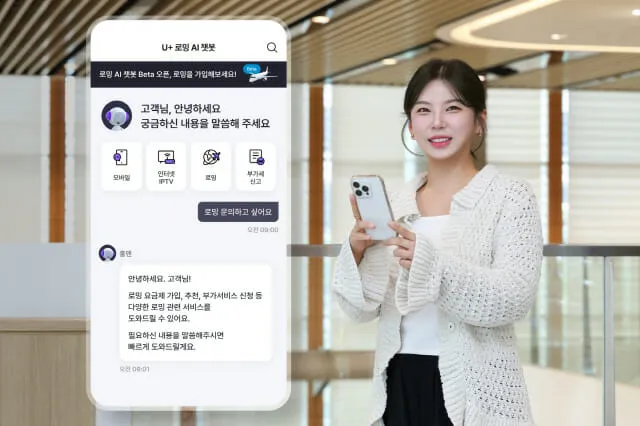
LG Uplus: NPS rises through better customer experience
LG Uplus introduced an LLM (large language model) into its roaming service sign-up process. It cut the process from 10 steps to 4 and reduced handling time by 60%.
Customers no longer need to fill in complicated forms. They simply make their request in natural language, as if in conversation. The AI identifies the intent and processes it automatically, and customer satisfaction (NPS) also rose significantly. The case achieves two goals at once: eliminating repetitive work and improving the customer experience.
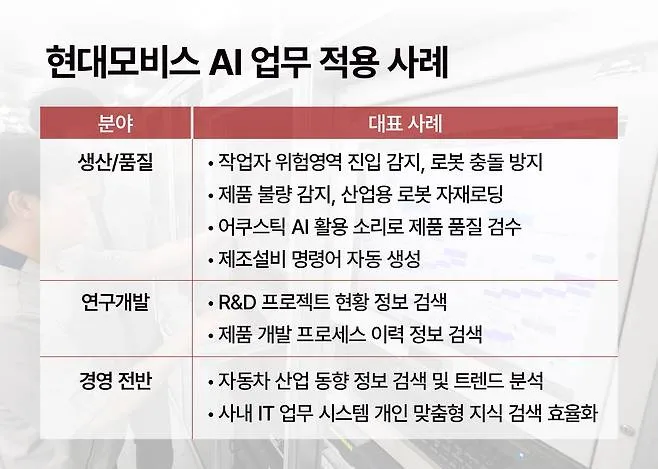
Hyundai Mobis: the three-second miracle of technical document search
Hyundai Mobis built a document search system using generative AI. Finding the right document among tens of thousands of technical manuals, quality reports and research materials by hand takes hours. AI finds the right document in three seconds and even summarizes it.
When a new engineer asks about "the defect history of this part," the AI finds 10 related reports and shows only the key points. This is a case that radically improved access to knowledge assets.
Takeaway: the two things large companies focus on
Samsung, LG and Hyundai share a common focus: eliminating repetitive work and improving access to data. The essence of AX is to have AI take over simple tasks so people can focus on more valuable work.
But what about our company?
The answer is "connecting" data, not "integrating" it
Looking at the large-company cases, you may think, "We should be doing that too..." But the reality for small and mid-sized companies is different.
They have neither the budget to develop their own AI model nor the time to replace their systems entirely. External cloud AI raises security concerns, and going on-premises means a heavy build cost.
So what should they do? The answer is "connecting" data, not "integrating" it. That raises a few questions.
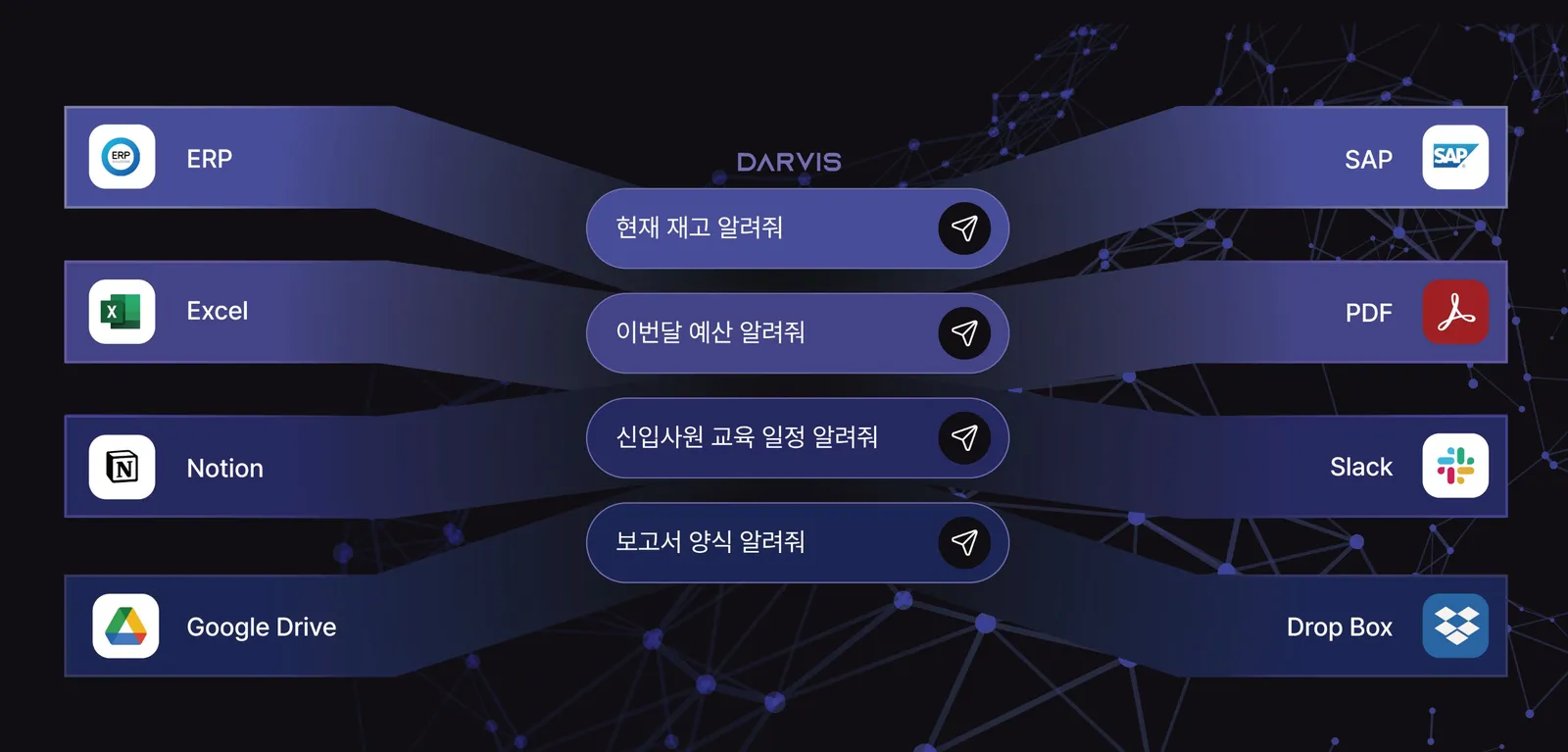
Q. Integration vs connection: what's the difference?
Data integration moves data from multiple systems into a single database. You gather all the data from ERP, MES and CRM to build a new DW (data warehouse). The problem is that it is expensive, takes a long time and requires changes to existing systems.
Data connection leaves existing systems as they are, and AI reads data from each system when it needs to. ERP stays ERP and documents stay documents. When the AI gets a natural-language question, it accesses each system and brings back the answer.
Q. Why is "connection" the more realistic approach?
It doesn't touch existing systems. There is no need to replace an ERP or MES that already runs reliably.
It is fast to build. Because data is connected only logically, without being moved, it can be built quickly.
Security gets stronger. Data does not leave the company, and each system's permission structure stays as it is.
The point is that the key to solving "lots of data, but we can't use it" is connection, not integration.
The ultimate in security and efficiency: DARVIS, enterprise AI intelligence
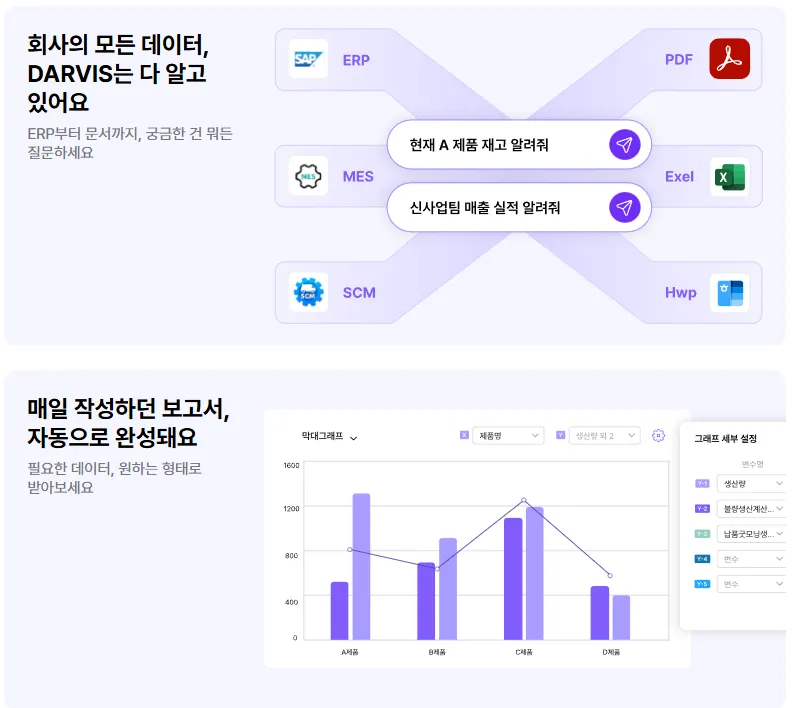
DFINITE's DARVIS is an enterprise AI platform that puts this "data connection" philosophy into practice. It is an all-around AI system that creates ROI: "faster work for staff, more accurate decisions for leaders."
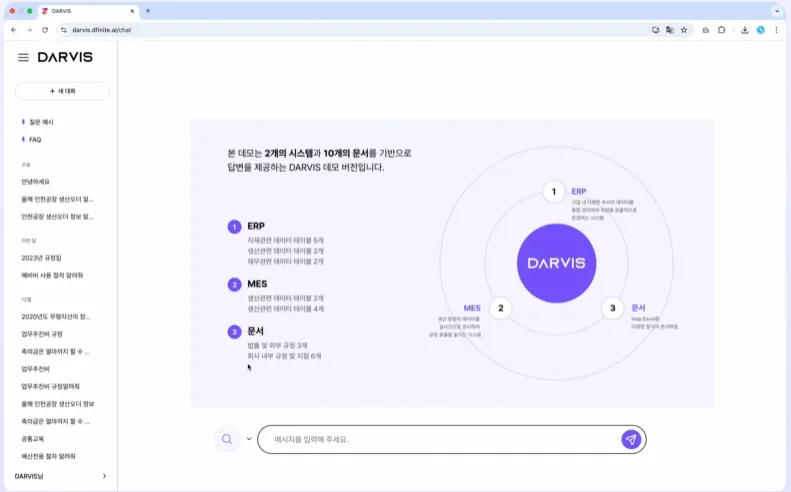
DARVIS core feature 1: Text-to-SQL
"Show me the top 5 departments by sales last month."
Ask this, and DARVIS automatically generates an SQL query and runs it against the ERP database. Business staff who don't know SQL can check data in real time.
According to DFINITE, although the LLM generates the SQL, every query passes through a validation layer before it runs. Incorrect queries, unauthorized access and dangerous commands are blocked automatically.
DARVIS core feature 2: RAG-based document search
Companies are flooded with unstructured data: Hangul (HWP) files, PDFs, emails, company rules and manuals. But it's hard to find what you need when you need it.
DARVIS solves this problem with RAG (retrieval-augmented generation). Ask about "the leave request procedure," and it finds the relevant company rule documents and shows a summary.
The risk of hallucination (generating false information) is also kept to a minimum. The AI always cites its source documents when it answers, and it does not answer when there is no supporting evidence.
DARVIS core feature 3: the GUARDIA security system
Many companies hesitate to adopt AI because of security. "What if our company's data goes outside?" "If the AI uses it for training, won't our confidential information leak?"
DARVIS is installed on-premises by default. It is installed on the company's internal servers, so data never leaves. According to DFINITE, it also works in network-separated environments.
The AI GUARDIA system automatically blocks risky questions and masks sensitive information. It also supports permission management by department and job level (RBAC), so the same question can show different results depending on the user.
Finally, it strictly follows a no-training-on-your-data principle. User questions and query results are never used to train AI models. Finance, manufacturing and public institutions, where security audits and compliance are mandatory, can use it with confidence.
DARVIS AI use cases at Korean organizations
Organizations that have adopted DARVIS report changes such as these.
Examples of quantitative impact
Less time to access information: time to find needed data cut sharply
Faster new-hire onboarding: AI instantly explains company rules and work processes
More accurate document search: accurate information from among thousands of documents
Case 1: Seoul Foundation of Women & Family
The Seoul Foundation of Women & Family manages a large volume of policy materials and program reports. It took employees a long time to find the documents they needed.
After adopting DARVIS, document search became much faster. Ask about "last year's gender equality program budget," and the AI immediately finds the relevant reports and summarizes the key points. Work efficiency improved dramatically.
Case 2: Business PT
The education company Business PT spent a large part of each day answering students' questions. Most were repetitive, such as "What is the refund policy?" and "When is the next class?"
After automating its FAQ with DARVIS, response time dropped sharply. Staff can now focus on more valuable consulting work, and student satisfaction has gone up.
DARVIS: the fastest way to become an AX organization
AX is not a story about the distant future. It starts with how efficiently you work today.
Between an organization that is slow to find data and one that finds it quickly, which can make decisions and respond to the market faster? Between one where new hires take a long time to learn the job and one where they get up to speed quickly, which is more competitive?
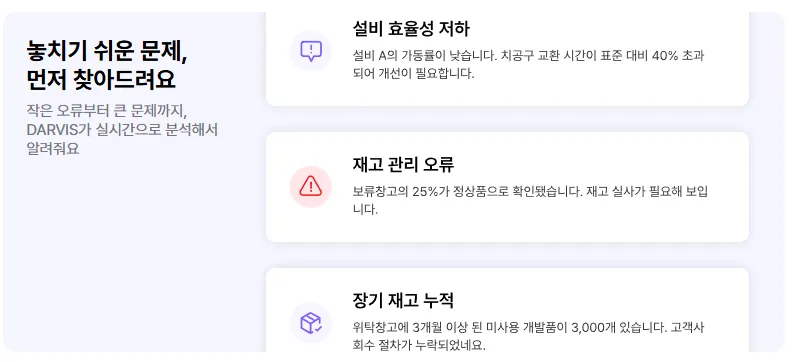
DARVIS is a realistic solution that lets you apply AI to work quickly, without touching existing systems and while keeping data secure.
In the AX era, an organization's survival depends on how quickly it can use its data. Take the first step with DARVIS. Thank you.
We join scattered data with an ontology, flag what drifts first, and keep the evidence behind every decision.