

AI in Korean manufacturing, 2025: from smart factories to quality control
Hyundai Motor's Gleo AI, Samsung Gauss, POSCO's smart systems and more: an analysis of AI in Korean manufacturing and the results reported.
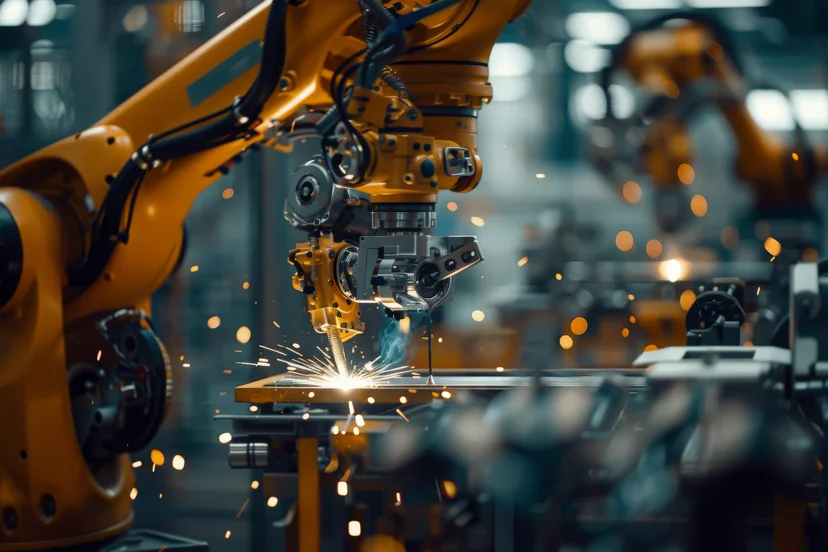
Korean manufacturing meets AI
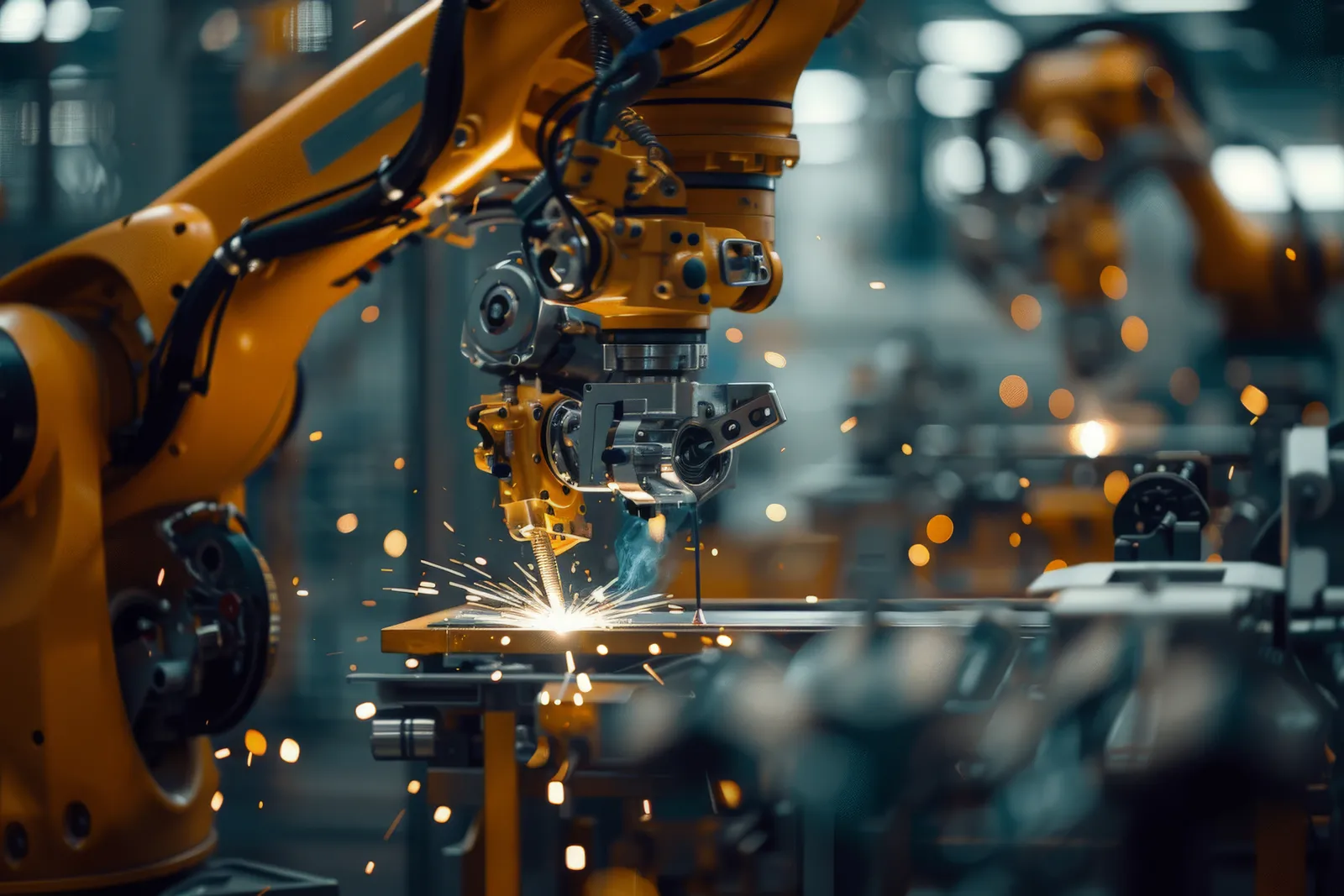
AI is no longer the exclusive domain of the tech industry. As of 2025, Korean manufacturers are moving quickly to use AI to strengthen efficiency, quality and competitiveness at the same time.
The innovation under way on traditional factory floors is more than adopting a new technology; it is a fundamental shift in how manufacturing works. Korean manufacturing AI cases have become a key indicator of where traditional industry is headed, and they show in concrete terms how AI adoption in manufacturing turns into real results.
From Hyundai Motor's Gleo AI to Samsung Electronics' Gauss and POSCO's smart systems, leading Korean manufacturers are racing to adopt AI. In this article, we look at the steps and effort they went through to secure a new competitive edge.
How Korean manufacturers are using AI

Korean manufacturers are using AI across the board, including smart factories, quality inspection and process optimization. The AI adoption rate across manufacturing as a whole is still around 24%, but it is expanding quickly.
Behind this rapid spread are government policies supporting digital transformation and expanding AI infrastructure. In particular, the government's program for spreading smart factories is giving even small and medium-sized companies more chances to access AI technology.
The main reasons manufacturers adopt AI are to address labor shortages, raise production efficiency and improve quality management. Companies that have adopted it see average gains of 15-30% in production efficiency and 10-25% savings in operating costs.
AI cases at leading Korean manufacturers
Hyundai Motor: smart factory innovation with Gleo AI
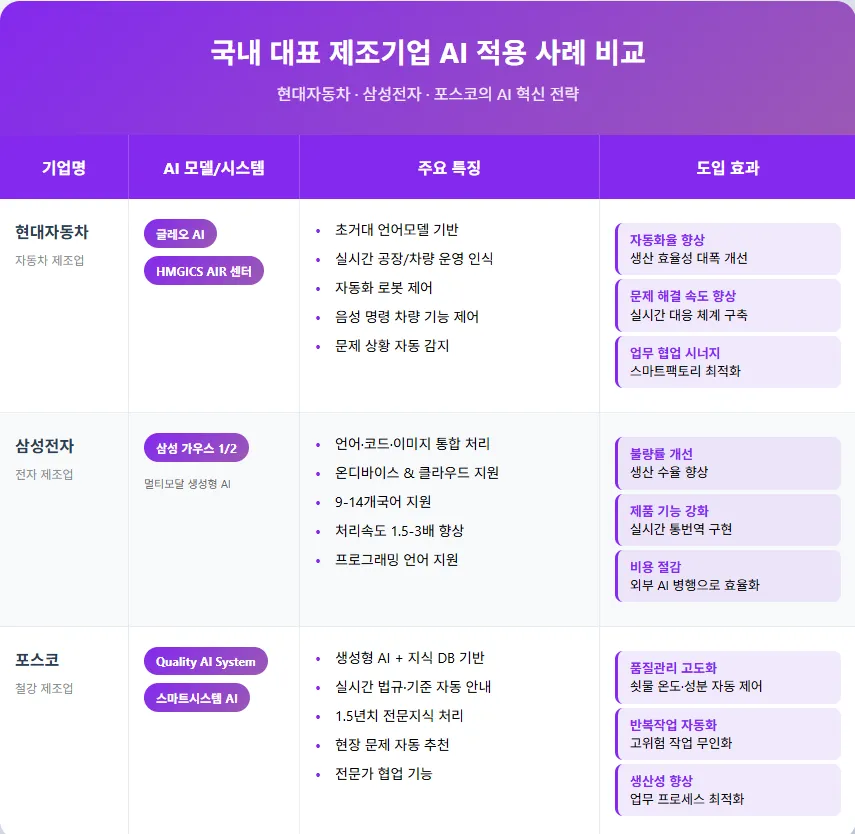
Hyundai Motor has introduced Gleo AI and the AI at the HMGICS AIR Center, setting a new standard for AI in manufacturing. Built on a hyperscale language model, the system recognizes plant and vehicle operating conditions in real time, controls automation robots and even supports control of vehicle functions by voice command.
As a result, the automation rate and production efficiency rose sharply, and the time needed to solve problems on the floor dropped significantly. In particular, it created synergy in collaborative work within the smart factory, which drove overall productivity gains.
Samsung Electronics: multimodal innovation with Gauss AI
Samsung Electronics' Gauss 1/2 is multimodal generative AI that processes language, code and images together. It comes in both an on-device version (Compact) and cloud versions (Balanced/Supreme), so the service can be optimized to the situation.
It supports 9-14 languages as well as programming languages, and processing speed is 1.5-3 times faster than before. On actual production lines, it is helping to reduce process defect rates and raise production yield, and it is also directly strengthening product competitiveness, for example by enabling real-time interpretation and translation on Galaxy products.
POSCO: full automation of the smart blast furnace
POSCO has built a Quality AI System and an integrated Smart System AI to manage every steelmaking process with AI. Based on generative AI and a knowledge database, it automatically provides guidance on regulations and standards in real time and recommends the best solutions to problems on the floor.
The system, which can process 1.5 years' worth of expert knowledge data, has automated every process on the production floor, including molten iron temperature, composition and volume. As a result, quality management has become more advanced, and high-risk and simple repetitive tasks have been fully automated, improving both worker productivity and safety.
Innovation at other major companies
LG Electronics and LG Innotek have greatly improved the accuracy of quality control by automating defect inspection and design review with vision AI. GS Caltex uses AI virtual sensors to predict coke content during crude oil refining, raising process efficiency.
HD Korea Shipbuilding & Offshore Engineering has applied AI to design and production automation for large ships, improving design accuracy and production speed at the same time. EcoPro uses an integrated vision AI monitoring system to prevent workplace safety accidents and strengthen risk management on site.
What AI does in manufacturing
Beyond the cases above, AI is driving change in many more areas of manufacturing. Broken down a little further, they look like this.

In process optimization, AI-based robots, IoT sensors and machine learning work together to control equipment automatically, forecast output accurately, and detect machine anomalies in advance for preventive maintenance.
In quality management, AI image analysis detects fine defects quickly and accurately that are hard to spot with the naked eye. Using data to create the best manufacturing conditions makes it possible to keep quality consistent.
On cost reduction, AI optimizes energy and raw material consumption and cuts labor costs by automating simple repetitive tasks. Predictive analysis also reduces unnecessary inventory and improves logistics efficiency.
For worker safety, AI detects hazardous areas in real time and predicts the likelihood of accidents so they can be prevented in advance. Its role is becoming more important, especially in high-temperature and high-pressure environments and in processes that handle hazardous substances.
Through work automation, AI replaces repetitive tasks and automates report and document generation, helping staff focus on more valuable work.
What Korean manufacturing AI cases say about the future
AI has already become the central pillar of digital transformation in manufacturing. Going forward, AI is expected to expand beyond today's production process optimization into product design, distribution management, inventory optimization and customer service.
In particular, demand for industry-specific AI solutions is surging, and tailored AI models, rather than general-purpose AI, are becoming more important. An era is coming when automotive needs AI built for automotive, semiconductors AI built for semiconductors and steel AI built for steel.
As ESG management requirements tighten, AI for environmentally friendly production is also expected to spread. AI's role will grow in areas such as carbon emissions monitoring, energy efficiency optimization and waste minimization.
Can our factory adopt AI too?
AI adoption is no longer something only large companies do. Mid-sized companies and small manufacturers can adopt it too.
What matters is not adopting the latest technology blindly but accurately understanding your plant's current situation and how ready your data is. If basic production data is being collected systematically, you can start with a tailored AI solution such as DARVIS.
In particular, an on-premises AI solution lets you adopt AI gradually, connected to your existing systems, without security worries. A realistic approach is to start with a pilot project, without a large investment, confirm the results and then expand step by step.
If you found today's look at Korean manufacturing AI cases useful, see the related posts below to get the latest on AI. And if you are curious about DFINITE's AI solution DARVIS, you can find more information in other posts on our blog.
The future of manufacturing goes hand in hand with AI. Start now.
We join scattered data with an ontology, flag what drifts first, and keep the evidence behind every decision.