
Construction AI case studies: how AI is making job sites smarter
How Hyundai E&C, Samsung C&T, DL E&C and other builders use AI, with reported results such as 90% faster design and up to 30% lower costs.
AI is building the future of construction
"AI doesn't lay bricks, but it makes the site smarter."
AI adoption is accelerating across industries, and construction is no exception. Even on construction sites, long seen as labor-intensive, robots now run safety checks, AI reviews drawings, and drones monitor progress from the air.
Major construction companies in Korea and abroad have recently been using AI to raise productivity, safety and efficiency at the same time. What remarkable changes are under way?
In this post, we look at what is happening on site through construction AI case studies.
Major construction AI case studies in Korea
Hyundai E&C: smart sites with AI robots
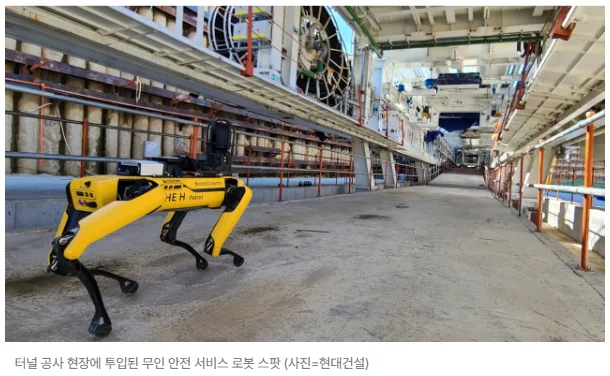
Hyundai E&C's best-known AI application is the introduction of "Spot," an unmanned safety robot. The robot carries out quality inspections and safety management even in blind spots that people find hard to reach, acting as the site's eyes and ears.
Even more impressive is its in-house "CCTV video analysis system." The CCTV cameras installed across the site do not just record. AI analyzes the footage in real time and detects hazards in advance.
The results of its design automation system are remarkable. Design work that used to take three to four days now takes less than 10 minutes after AI adoption, a time saving of about 90%, and existing design costs fell by 20%, according to the company.
DL E&C: a wizard of space planning
DL E&C drew attention with its AI design technology for apartment parking lots. On the same floor area, AI calculates the optimal layout and can increase the number of parking spaces by 5% or more. For residents, that means fewer parking worries: two birds with one stone.
Its defect inspection system, which combines drones and AI, is also worth a look. It is a smart system in which AI automatically analyzes site photos taken by drones to manage quality, checking even the details the human eye can easily miss.
Samsung C&T: AI services tailored to residents
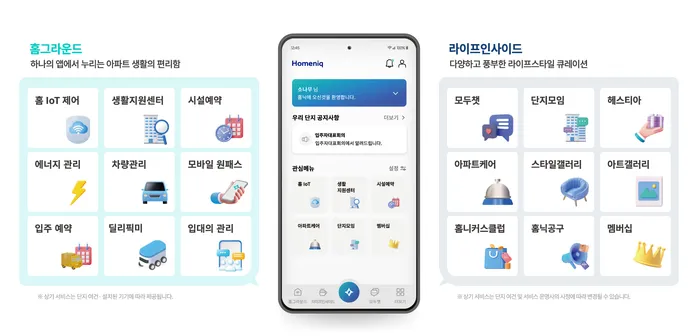
Samsung C&T launched "Homeniq 2.0," a housing platform tailored to residents. AI analyzes residents' daily patterns and provides services optimized for each person.
Here are the AI technologies applied at Raemian Songdo Station Centripole:
AI mood lighting: adjusts lighting automatically to the time of day and the resident's mood
AI mosaic camera: strengthens security while protecting personal information
AI parking solution: guides drivers to the best available space
These show that AI is being used in many ways to make residents' lives more convenient.
Lotte E&C: innovation through startup collaboration
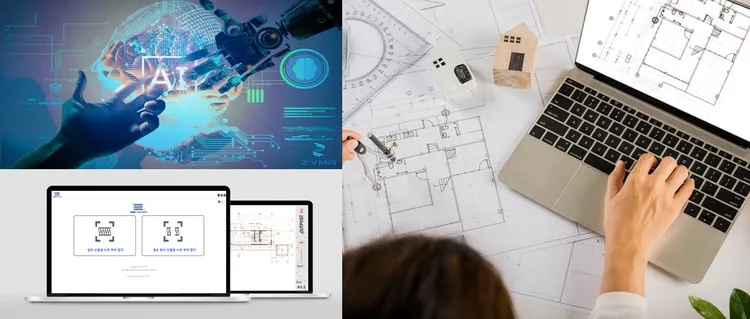
Lotte E&C worked with the startup Duaz to introduce an AI insulation review program. Just upload the design drawings, and AI automatically finds missing insulation to prevent design errors in advance. This improved energy efficiency and also sharply reduced the risk of defects.
GS E&C: AI that breaks down communication barriers
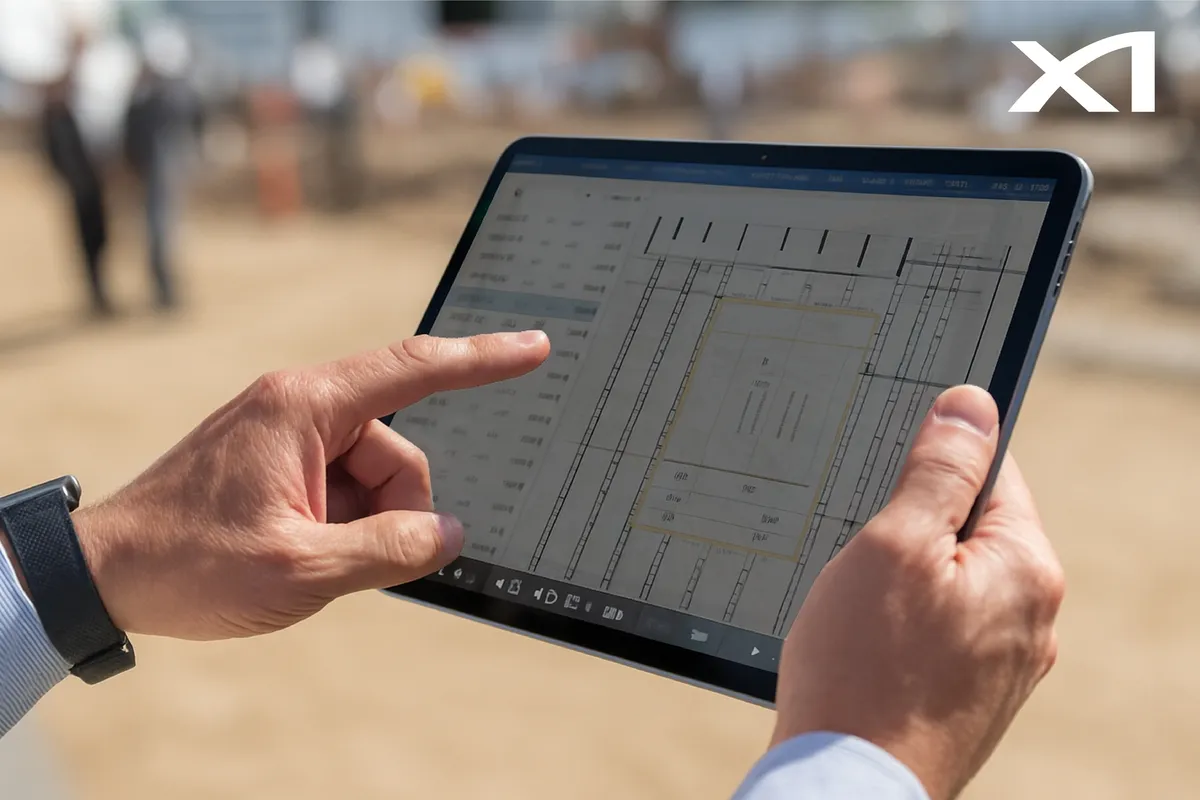
GS E&C's "Xi Voice" is a leading example of solving communication problems on construction sites. As the share of foreign workers grew, miscommunication risked leading to safety accidents. A real-time AI interpretation service solved the problem cleanly.
What the construction AI cases show
What has changed in the construction industry as a result of these AI technologies? The numbers make the impact clear.

First, lower costs and shorter schedules
Adopting AI brought three main benefits: lower construction costs, shorter construction schedules and shorter design time.
For construction costs, design optimization delivered savings of up to 30%, and higher work efficiency and less repetitive work shortened construction periods by 5-12%. There were also cases where design time was cut by more than 90%.
Second, a step change in quality and safety
This goes beyond simple automation. The core is data-driven prediction, real-time judgment and work optimization. AI monitors the site around the clock and prevents accidents by detecting hazards that people might miss.
Third, new added value
Better efficiency has also created added value in several areas, mainly the following:
Easing labor shortages: automating simple, repetitive tasks lets skilled workers focus on more specialized work
Responding to environmental regulation: AI-based energy efficiency management
Customized services: differentiated living experiences such as Samsung C&T's Homeniq 2.0
Global and academic lessons from construction AI cases
Leading cases overseas
At Shawmut Design and Construction in the United States, AI combines weather data and GPS information to predict accident risk. During COVID-19, it even monitored in real time whether workers kept a 6-foot distance from each other.
Angelswing is transforming construction monitoring by building 2D/3D digital twins from data collected by drones. It shows what real smart construction looks like, with the physical and digital worlds connected.
Global solutions are spreading
Global solutions such as Autodesk Construction Cloud, Procore Copilot and Oracle Construction Intelligence Cloud are automating the entire process, from design to construction and operations.
Academic validation
According to a study published in an MDPI journal that analyzed 135 related papers from 1985 to 2024, AI is actively used at every stage of construction, including planning, monitoring, decision-making, forecasting and optimization.
Why do security and internal data integration matter?
There is one important point here, though. Construction sites are full of sensitive design drawings, permit documents and subcontractor information, so security is critical.
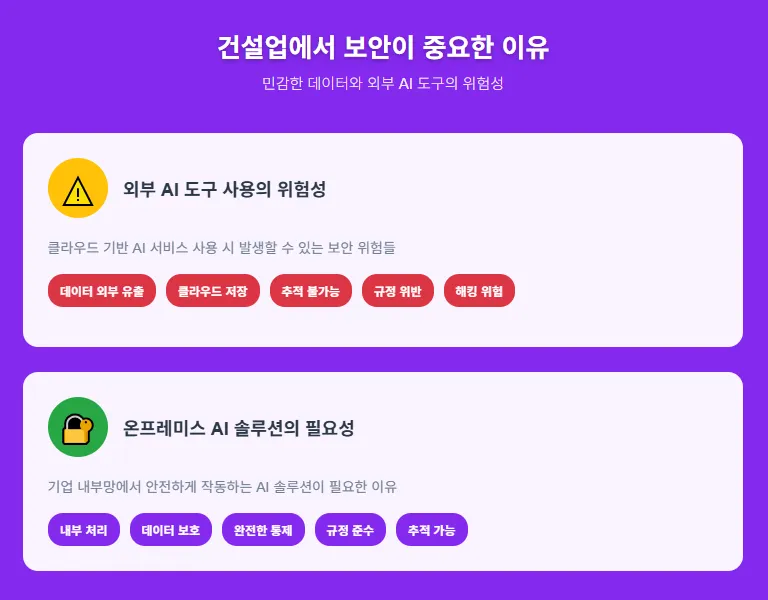
The limits of external AI tools
Using general cloud-based AI services such as ChatGPT can create several risks. The main ones are:
Security risk from company data being sent to external servers
Lack of transparency in how data is stored and tracked
Limited integration with the company's internal systems
This can make AI hard to use, and it can also create serious risks.
Why on-premises AI is needed
That is why many construction companies are looking for on-premises AI solutions that run securely inside the corporate network: a way to process data only internally while still using everything AI can do.
On-premises deployment is also a defining feature of DFINITE's DARVIS AI solution.
DARVIS, an AI agent for construction
If you are looking for an AI solution that connects to your internal systems while keeping security tight, DFINITE's DARVIS is the right fit.
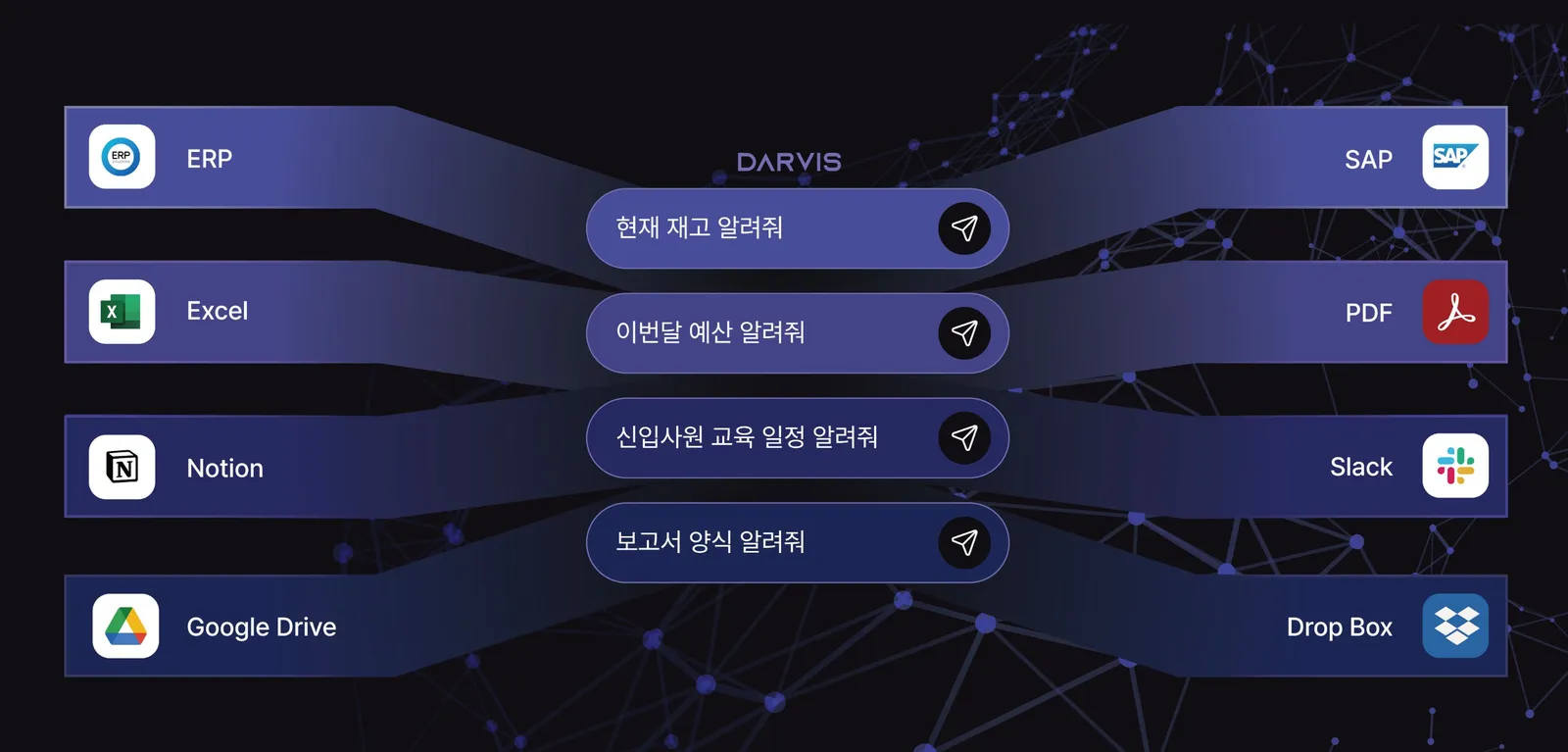
What makes DARVIS different
DARVIS is not just a chatbot.
It is a knowledge AI agent that brings together a construction company's design drawings, construction manuals, defect history and regulatory documents, and gives accurate answers to questions asked in natural language.
Using AI while protecting security
DARVIS has three main features: 1) on-premises installation, 2) the GUARDIA security system, and 3) permission-based access.
1) On-premises installation: use AI without any data leaving the company.
2) GUARDIA security system: every AI request log can be traced.
3) Permission-based access: different information is provided by department and job level.
DARVIS is an AI solution with a security system designed for both external and internal threats.
Features built for real work
With DARVIS, questions like these get answered quickly.
"How did we handle the leak defect on the 3rd floor of Building A last month?"
"What regulatory standards apply when building this structure?"
"Find the finishing-material specifications we used on a similar project."
Type questions like these into DARVIS in natural language, and it gives you an accurate answer right away. Practical features such as drawing search, defect history lookup and automatic recommendation of construction-method standard documents improve speed, accuracy and security together.
Connecting data with TEXT2SQL
text2SQL, DARVIS's core technology, automatically converts natural-language questions into SQL and logically links data across systems such as ERP, MES and design systems.
Scattered information can be brought together and used without changing existing systems.
Construction AI is a survival strategy, not an option

AI is already becoming the new standard in construction: Hyundai E&C's 90% shorter design time, DL E&C's 5% increase in parking capacity, Samsung C&T's customized residential services. What these changes show is clear.
The question now is not whether to adopt AI, but which AI to adopt and how. Learn from leading overseas cases, but choose a solution that fits the characteristics and security requirements of Korea's construction industry.
Did you find this look at construction AI case studies useful? If you would like more AI insights, see the related posts below. We will keep bringing you new and varied AI insights.
If you are curious about DFINITE's DARVIS service, use the "Request a consultation" button below. DFINITE will work with you on construction AI innovation from day one. Thank you!
We join scattered data with an ontology, flag what drifts first, and keep the evidence behind every decision.