
Top 5 e-commerce AI use cases: practical sales and efficiency gains in 2026
How Ably, Musinsa, Coupang, SSG.COM, and Kurly use AI, from virtual fitting to demand forecasting, and a practical path for mid-sized e-commerce companies.

"Boss, can we see last month's shoe inventory and sales report for the Seoul region right now?"
How many e-commerce companies could answer that on the spot? Most send a request to the IT team, wait half a day, and get an Excel file back. The data is definitely stored somewhere, but it can't be pulled out at the moment it's needed. That is the "data silo" problem.
Korea's large e-commerce companies are solving this problem with AI. We look at e-commerce AI use cases where Ably, Musinsa, Coupang, SSG.COM, and Kurly have each built AI into their operations in their own way, and at practical approaches mid-sized companies can apply too.
Top 5 e-commerce AI use cases in Korea
The large platforms take different paths to AI, but they share the same goal: cut the time spent searching for information and make operations more efficient.
Company | Where AI is used | Core technology | Direction |
|---|---|---|---|
Ably | Personalized recommendations, AI Profile | Taste-based recommendation algorithm | Better user experience |
Musinsa | Image search, review analysis | Image-based similar-product search | More accurate search |
Coupang | Demand forecasting, logistics optimization | Data-driven demand forecasting model | More efficient supply chain |
SSG.COM | Query correction, customer service | Natural language processing (NLP)-based search | Preventing customer churn |
Kurly | Managing fresh food waste | Demand forecasting and order optimization | Better profitability |
Ably: an AI stylist that knows your taste

Ably presents taste-based personalized recommendations as its core growth engine. Rather than relying only on a user's click history, it draws in real time on data from groups of users who like similar styles, so the products you want to buy show up at the top as soon as you open the app.
Its "AI Profile" feature also offers virtual fitting: users upload a photo of themselves and see how clothes on sale would look on them. It is cited as a case that eases the frustration of customers who cannot try clothes on, while also addressing sellers' need to cut the cost of model photo shoots.
Musinsa: fashion search with a single photo
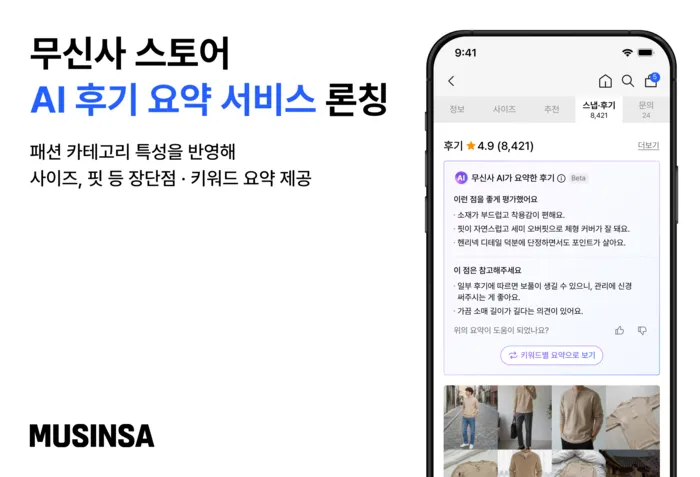
Musinsa improved its search experience by introducing image-based similar-product search. When you spot clothes you like on the street, you upload a photo and it finds products with a similar fit and color. The exact AI technology behind it and its internal architecture have not been disclosed, but it is often cited as a leading example of fashion-specific visual search.
Review-based information is another feature. It analyzes large numbers of reviews and sums up key fit information as tags, such as "Runs small" and "Color is close to what's on screen," to help shoppers decide.
Coupang: the demand forecasting behind Rocket Delivery

Coupang's "Rocket Delivery" is more than fast shipping. It is known to work by having an AI-based demand forecasting model predict which products will sell, and how many, in a given area tomorrow, and then moving inventory to that area's delivery camp in advance.
It combines many variables, such as weather, day of the week, and regional buying patterns, to forecast demand, and it optimizes delivery routes to match real-time conditions. It is a leading e-commerce AI use case in which data-driven decisions across the supply chain have raised logistics efficiency.
SSG.COM: smart search that understands typos

SSG.COM has invested in advanced natural language processing search so customers can find what they want in the Shinsegae Group's huge product range without getting lost. It is known to correct typos and mixed Korean-English input to match the shopper's intent before showing results, and to use chatbots to automate customer service.
Kurly: protecting freshness with data
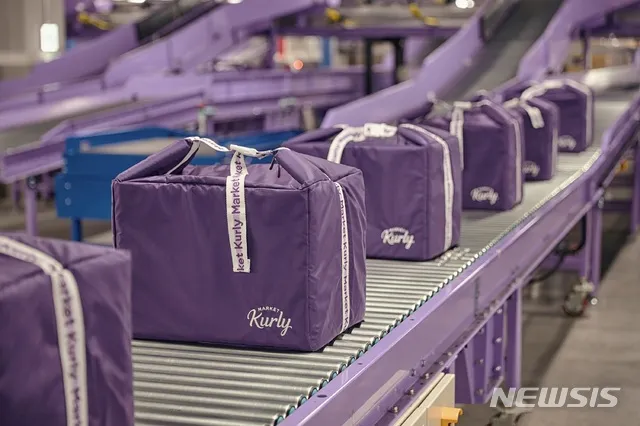
The biggest challenge in fresh food e-commerce is the waste rate. Kurly combines past order data with weather, temperature, public holiday, and event information to calculate the next day's expected sales, and optimizes order quantities on that basis. It is cited as a leading Korean e-commerce example of supply chain management built on data science.
The common strategy of the large platforms: connecting data
Look at these five companies' e-commerce AI use cases and a common thread appears. Instead of replacing their existing systems wholesale, they chose to have AI read scattered data and connect it.

Ably connected purchase history data to its recommendation algorithm, and Coupang connected sales data to its logistics system to position stock in advance. The key is "data connection," not "data integration."
Data integration means moving data from every system into a single repository. It takes enormous time and money. By contrast, data connection leaves existing systems as they are, and AI reads data from each system when needed. Adoption is fast and the cost burden is lower.
A practical option for mid-sized e-commerce companies: DARVIS
Large companies such as Ably and Coupang invest tens of billions of won to build their own AI systems. But not every e-commerce company can invest on that scale.
DARVIS adds only an AI intelligence layer without touching existing systems, bringing the data connection benefits that large platforms enjoy within reach at a realistic cost.
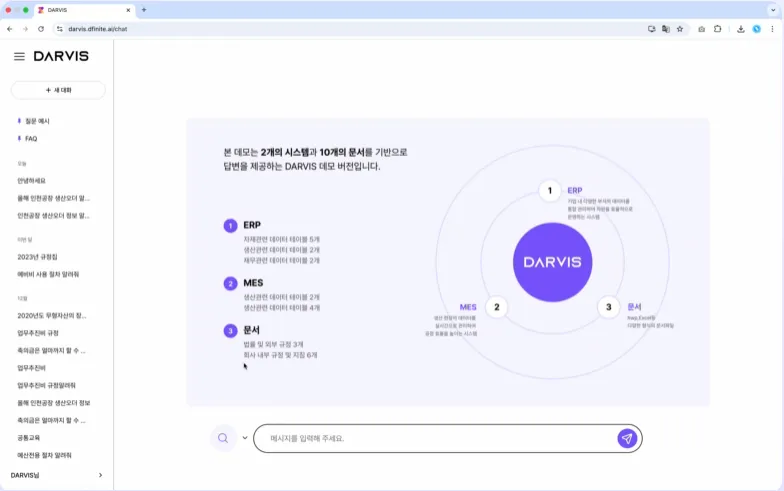
txt2SQL: ask in plain language, get the data instantly
"Pull a list of items with fewer than 10 units in stock that are running ads today." For a question like that, you can get an answer without asking the IT team. This is thanks to txt2SQL, which automatically converts natural-language questions into database queries.
MDs and operations teams can query data themselves and use it directly in decisions.
RAG: search large volumes of internal documents quickly
E-commerce companies have many internal documents staff need to know, such as return rules, event terms, and shipping policies. Ask "During this promotion, which card issuers allowed stacking point discounts?" and DARVIS searches internal rulebooks and event guides in real time and gives an accurate answer.
The time new customer service agents spend memorizing manuals also drops sharply.
GUARDIA: on-premise security that protects customer data
For an e-commerce company, customer purchase patterns and sales data are core confidential information. Using an external AI service can mean this data is sent to outside servers, which raises security concerns.
DARVIS's GUARDIA security system is installed directly on the company's own servers (on-premise), so data does not leave the company. Access permissions by department and job level, plus audit logs that record who looked up which data, prevent security incidents before they happen.
Item | Before | After adopting DARVIS |
|---|---|---|
Data lookup | Request to IT, then half a day of waiting | Answer from a natural-language question |
Document search | Opening and browsing files by hand | Instant answer to a single question |
New-hire onboarding | A long time to learn the manuals | Working on the floor quickly with AI Q&A |
Security | Risk of data leaks when using external AI | Fully blocked by on-premise installation |
Companies that have data but can't use it, and companies that use it instantly
Korean e-commerce AI use cases point to a common truth: what separates competitors is less how much data they have than how quickly they put it to work in decisions.
You don't have to replace your existing systems. You only need to add intelligence. DARVIS leaves your existing ERP, logistics systems, and internal documents as they are and connects them logically with AI, so a company-wide rollout is quicker.
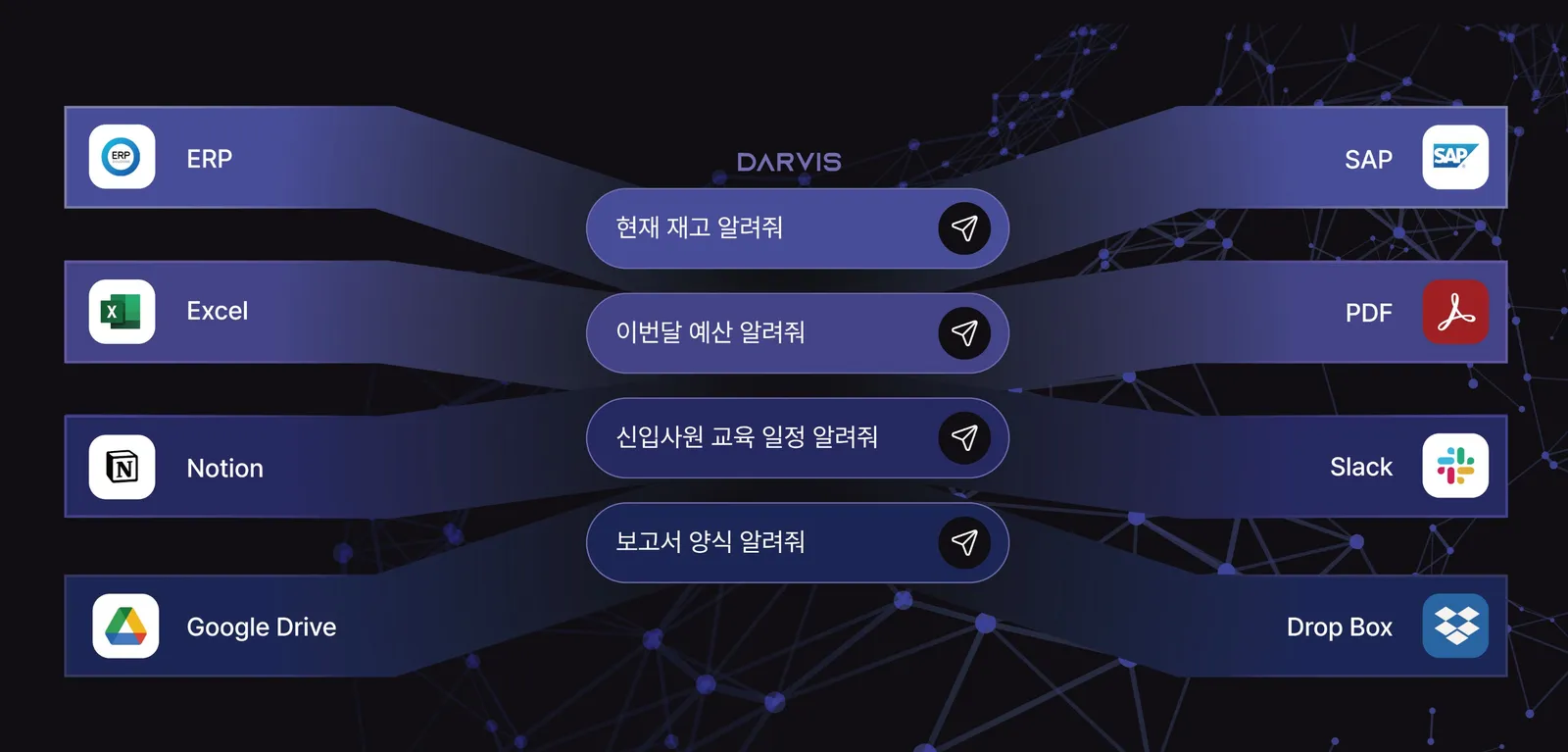
If you're wondering whether your company's data can be connected with AI too, work through an adoption scenario tailored to your company with one of our expert consultants.
If you want practical AI insights and the latest trends, read the DFINITE DARVIS blog. We share AI know-how and real cases that show how to raise productivity at work.
For more AI insights, see the related posts below. Thank you.
We join scattered data with an ontology, flag what drifts first, and keep the evidence behind every decision.